

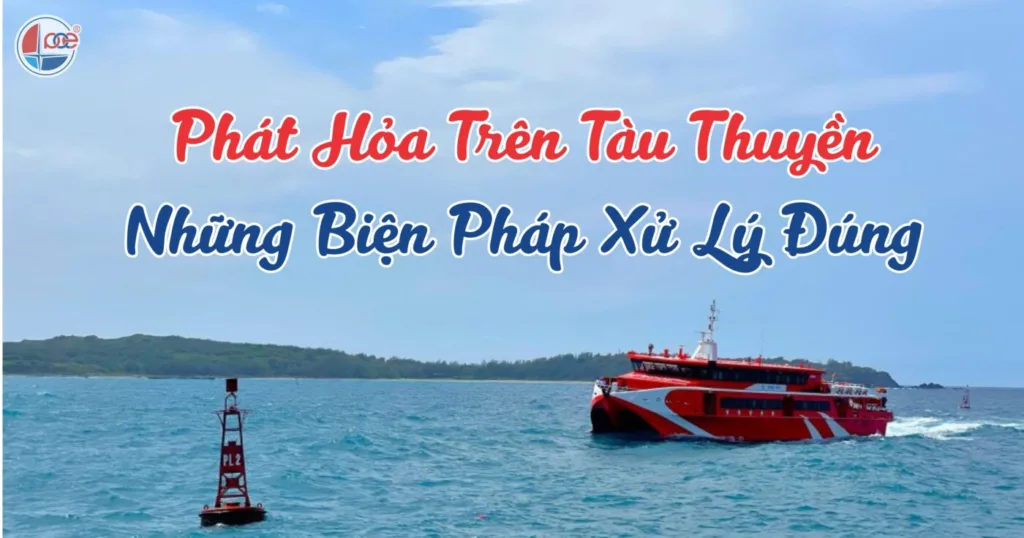
Safety – the top factor when traveling by sea. When enjoying a sea trip, tourists are often attracted by the vast beauty and relaxing experience in the middle of the ocean. However, maritime safety is always a key factor for each journey to be complete. Although the risk of fire and explosion on board ships is very rare on each trip, the world still records every year hundreds of fires and explosions occur on ships, causing serious consequences to human life and the environment. Therefore, the prevention and preparedness with fire is extremely important. Once fire on boat If an accident occurs, reaction time and correct handling will directly determine the safety level of passengers and crew.
In Phu Quoc Express, the entire fire prevention and fighting process is built in accordance with the International Convention for the Safety of Life at Sea - SOLAS (Safety of Life at Sea). SOLAS is an international maritime treaty that sets minimum safety standards for the design, equipment and operation of ships, and is considered the most important convention on global maritime safety. By strictly complying with SOLAS and internal measures, Phú Quốc Express ensures that all emergency situations, especially fire and explosion incidents, are handled professionally, ensuring absolute safety for passengers.
1. SOLAS international standards and Phú Quốc Express commitments
SOLAS sets out strict requirements to ensure fire safety on board ships. Key requirements include:
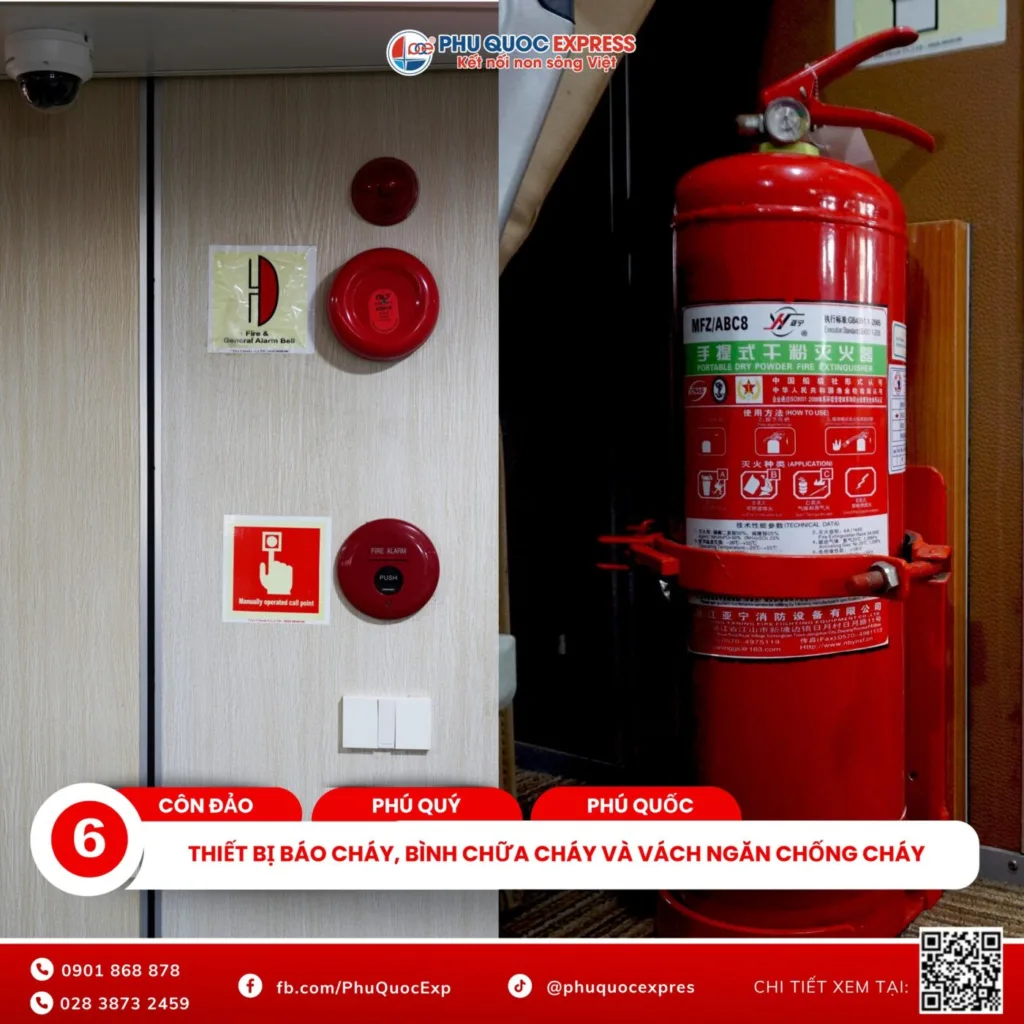
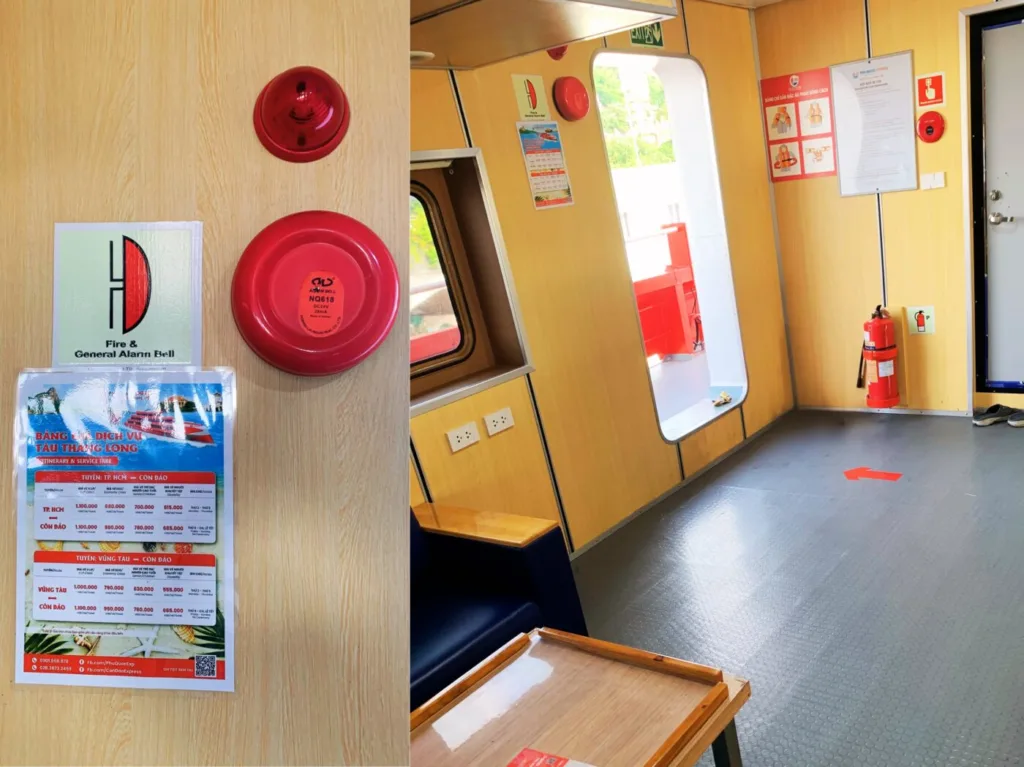
- Automatic fire alarm and fire extinguishing system: Ships must be equipped with automatic smoke and heat detection systems and fixed fire-extinguishing means (such as CO₂ gas systems, foam or water spray systems) in key areas. This allows fires to be detected early and extinguished quickly at the source.
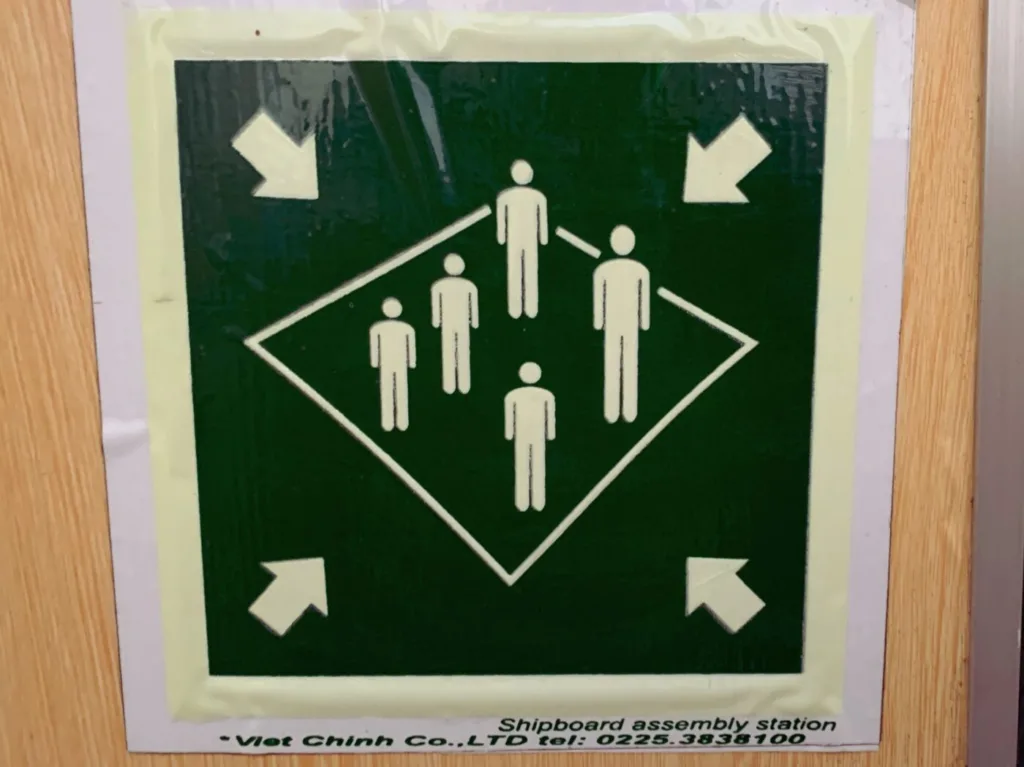
- Passenger evacuation and assembly procedures: Every ship must have a diagram. muster station (assembly station) clearly, with enough space for everyone, along with a procedure to guide passengers to move safely when ordered to leave the ship. At the same time, muster list (role roster) is drawn up in detail to specify the duties of each crew member in the event of an emergency. For example, this roster specifies who is in charge of firefighting, who prepares lifeboats, who directs passengers, etc.
- Life-saving equipment and emergency communication means: Including life jackets for all passengers, life rafts, rescue boats, and emergency communication equipment (radios, navigation systems, signal flares, etc.). These equipment must be ready for use at all times and meet SOLAS standards to ensure everyone can leave the ship safely if the worst happens.
- Periodic training and drills for crew: Crew members must be properly trained in fire prevention and fighting and participate in regular drills. According to SOLAS regulations, each crew member must participate in at least one abandon ship drill and one fire drill each month. Regular training helps crew members master skills, coordinate smoothly and ready to respond effective when an emergency occurs.
Phu Quoc Express High Speed Ferry committed to strictly comply with the above SOLAS standards, and to add many more safety measures Internal to further enhance fire prevention capabilities:
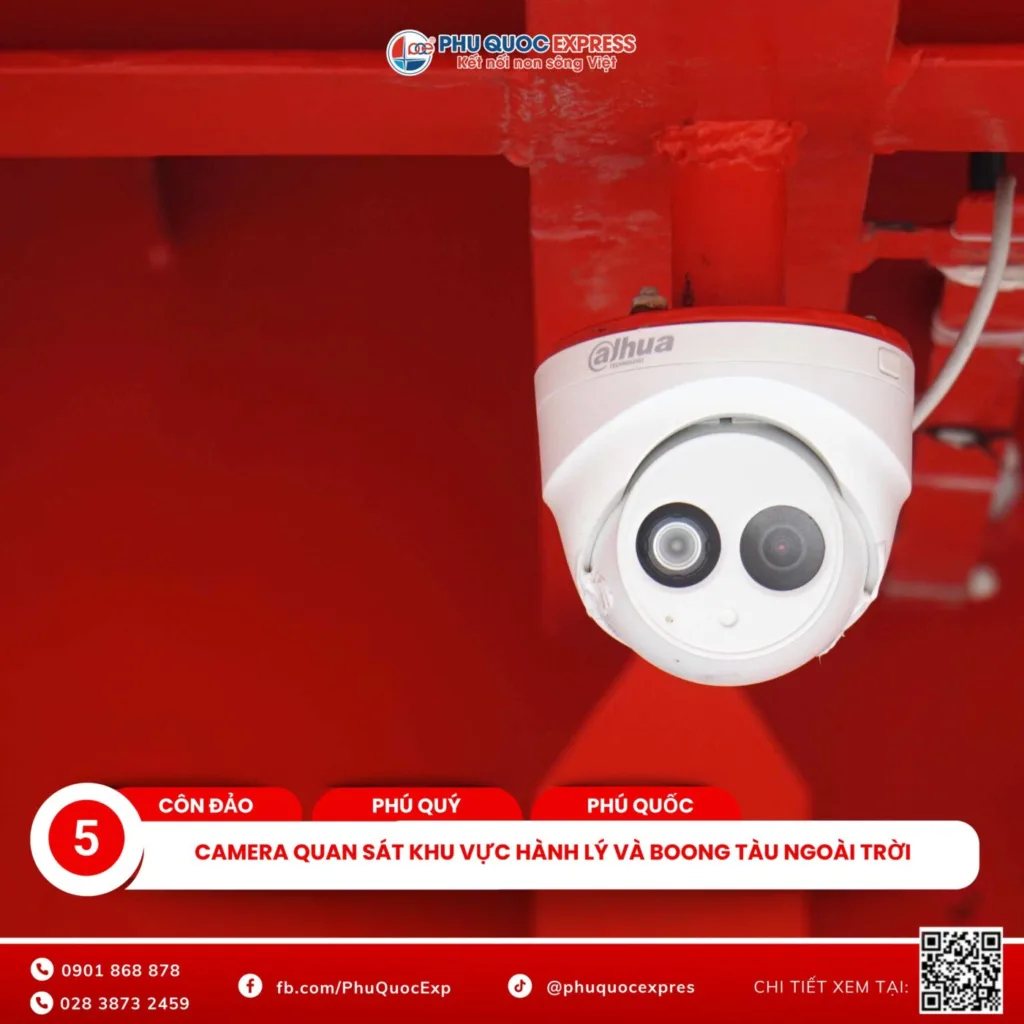
- Ship-wide surveillance camera system: Cameras are installed in all important areas, allowing for early detection of smoke, fire or abnormalities. Thanks to 24/7 monitoring, the ship's commander can quickly recognize the problem at the first sign and promptly take action.
- Periodic training for crew members on fire fighting skills: In addition to basic training courses, crew members are provided with advanced training on how to use fire fighting equipment, escape techniques, rescue and handling complex situations. Continuous training helps the entire crew crew Maintain quick reflexes and up-to-date knowledge of fire safety.
- Emergency fire drill: Before each trip, passengers are informed. safety instructions and see how to wear it life jacket. Periodically, Phu Quoc Express High Speed Ferry Organize emergency simulation drills (e.g. small fires outside and in the passenger compartment).
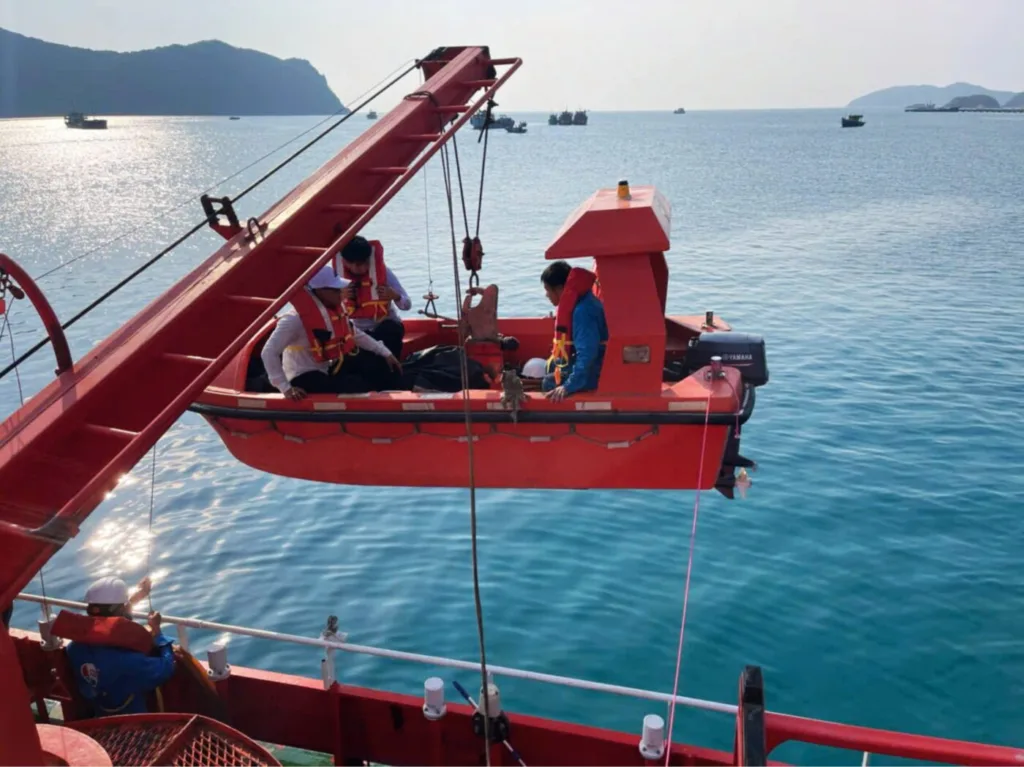
2. Initial identification and response when detecting “fire”
As soon as there is any signs of fire on board (such as smelling a burning smell, seeing smoke or sparks…), the discoverer must instantly Do the following:
- Stop what you are doing: Stop all current operations and ensure that the unfinished work does not create another hazard. The number one priority at this time is to focus on dealing with the fire, so remove any distractions or factors that could aggravate the situation.
- Quickly move to the muster station: Leave the danger zone and go to the designated safe assembly point immediately. This will ensure that you are not trapped in the fire zone and are ready to take on emergency tasks with other members.
- Bring the equipment assigned in the muster list: Depending on the assigned task, the discoverer should bring the necessary equipment when moving to the gathering station. For example, if the assigned task is fire fighting, bring a portable fire extinguisher or breathing mask; if the task is rescue, bring first aid kits or life jackets… Preparing the right equipment helps to be ready to act immediately when ordered.
- Report to the commander (officer on duty) as instructed: Upon arrival at the muster station, promptly notify the duty officer or situation commander of the location, nature of the fire and any relevant information. Early and detailed reporting helps the commander assess the situation accurately and issue appropriate response orders.
In Phu Quoc Express High Speed Ferry, every crew member knows the rules by heart “FIRE” – English acronym that reminds the sequence of actions to take in case of fire. Specifically:
- F – Find it: Quick locate There is fire or smoke. Locating the exact location of the incident helps to focus on effective handling, not missing the fire.
- I – Isolate it, Inform: Isolate the area Fire by closing doors, turning off ventilation fans or local power sources to limit the spread of fire. At the same time Notification immediately notify the fire brigade and the officer on duty via the alarm bell or intercom. Note that you should never attempt to extinguish the fire yourself without first alerting others – always give priority to sending out the alarm signal first.
- R – Report it: Detailed report Provide complete information such as location, type of fire (electrical, fuel, burning materials, etc.), extent of fire, whether anyone is injured or trapped inside, etc. Clear reporting helps commanders and rescue teams make accurate decisions.
- E – Extinguish/Escape: Extinguish fire by on-site fire fighting equipment if equipped and secured. For example, use a portable fire extinguisher appropriate to the type of fire (CO₂ for electrical fires, foam for gasoline fires, water for general materials) and keep a safe distance. However, if the fire gets out of control or the smoke is too thick, escape immediately. Prioritize life preservation, do not risk fighting a fire alone in a situation beyond your skills or available equipment.
The above FIRE rule is well trained for all crew Phu Quoc Express High Speed Ferry, helping people react in an orderly and effective manner when an incident is detected. By correctly and completely implementing the steps: Detection – Isolate/Notify – Report – Extinguish/Escape, the fire will be controlled as quickly as possible, minimizing damage and danger.

3. How to handle smoke detection behind closed doors
One of the most dangerous situations on board is noticing smoke billowing from behind closed doors, while it is not clear how much fire is burning inside. Smoke seeping through the door indicates that there is a possibility of a fire in that enclosed space, and improperly opening the door could cause the fire to flare up (due to the sudden addition of oxygen). When encountering this situation, the discoverer should calmly follow the following procedure:
- Check door temperature: Use palm of hand Quickly touch the door or use a special tool to feel for heat. If the door is blazing hot, it means there is a big fire behind it – absolutely do not open the door at this time. If the door is slightly warm or normal, you can proceed to the next step but still be very careful.
- Open the door slightly to observe (if safe): Stand to one side of the door (avoid facing it), unlock it and then open the door a little just enough to see inside. Ready to close immediately if needed. Quickly check the inside condition: smoke, fire, heat levels. Note: if seen thick smoke through the door slot, close the door immediately – this indicates a major fire, do not enter without specialized breathing equipment.
- Close doors and do not enter if smoke is excessive: In case of heavy smoke or strong fire inside, Never enter without permission. Close the door to limit the oxygen to feed the fire and stop the smoke from spreading. Do not enter alone, or even with two people, without a breathing mask or SCBA (self-contained breathing apparatus) – toxic fumes can cause asphyxiation very quickly.
- Press the emergency alarm: Activate general alarm system of the ship (usually by pressing a nearby fire alarm button or using a bridge radio) to notify the entire ship of the situation. The alarm will initiate emergency procedures, calling all crew members to their positions.
- Prepare fire fighting equipment and wait for rescue team: Quick Have fire fighting equipment ready nearby (like fire extinguisher, fire hydrant…) but do not volunteer if safety conditions are not met. When the ship's dedicated fire fighting team arrives, report to the team leader about what you have observed (door temperature, amount of smoke, color of smoke, noises inside if any…). This information is very valuable for the rescue team to assess the situation before opening the door to put out the fire.
The above procedure is to ensure maximum safety for the discoverer and the ship. Careful inspection and timely alarm will help prevent fire spread, and at the same time, create conditions for the fire brigade to be best prepared (wearing fire-resistant clothing, wearing breathing apparatus, arranging nozzles...) before facing a fire in a confined space - which is potentially dangerous. gas explosion or fire very high
4. Duties of key positions on board
On the Phú Quốc Express high-speed boat, each crew member has clear responsibilities in case of fire, as stated in the Muster List and thoroughly understand through training sessions. Below are The role of key positions in coordinating incident handling:
4.1. Officer of the Watch (OOW)
- Collect initial information about the fire: Upon receiving a report from the discoverer, the officer on duty asks quick questions to grasp the details of the situation (specific location, visible smoke or fire, type of burning material if known, level of danger, etc.). This information helps prepare an appropriate response plan.
- Instruct the discoverer to perform initial safety: The officer on duty calmly instructs the reporter via walkie-talkie or intercom on immediate action, such as “close the door, cut off power to the area and pull out immediately”, ensuring that the person knows how to protect themselves and fire isolation while waiting for the fire department.
- Activate the alarm and make a public announcement: Right away Press the ship-wide alarm after confirming a fire. At the same time, use the public address system to clearly announce the emergency situation: location of the fire (name of compartment, deck, bow/tail area), and provide preliminary instructions to passengers and crew. Early announcement helps everyone stay alert and start moving to the assigned location.
- Report and hand over command to the captain: When the captain is on the bridge, the officer on duty Report all information collected and actions taken (alarm raised, isolated…). Then handover of command The watch officer then moves on to his assigned specialist duties (e.g. participating in firefighting, assisting in command of communications, etc.).
4.2. Captain
- Receive command and assess the situation: The captain immediately took over from the OOW, requesting a full report of all details of the fire. With experience and a global perspective, the captain analyzed the severity of the incident to make timely decisions optimal response. Quick, accurate decisions at the beginning are decisive, can minimize damage caused by fire.
- Decide on fire suppression or evacuation plan: Based on the report and observations (via camera or directly), the captain decides on the main course of action. If the fire is small and can be controlled, he will order the ship's fire brigade to extinguish the fire on site (can mobilize fixed fire extinguishing systems such as CO₂ in the engine room or sprinkler systems if available, combined with fire extinguishers, nozzles). Conversely, if the fire spreads quickly and is out of control, the captain can prepare a plan emergency evacuation: send out distress signals, instruct passengers to put on life jackets, lower lifeboats or life rafts. Every decision is considered to ensure safety of life is the number one priority.
- Direct the assignment of personnel to implement the plan: With supreme command, captain Coordinate the entire crew according to the selected response plan. He clearly assigned the person in charge of the fire fighting team at the scene, the person in charge of evacuating passengers, the person in charge of external distress communications... The captain continuously contacted the contacts (via walkie-talkie) to grasp the progress of the handling and gave timely instructions depending on the situation (such as closing the watertight doors to block smoke, reducing speed or stopping the ship, turning the bow of the ship downwind so that smoke does not blow into the passenger area...). The smooth coordination according to the captain's instructions ensured that all forces on the ship operated synchronously and effectively in emergency situations.
4.3. Crew
- Gather at assigned location upon hearing alarm: When the fire alarm sounded, all crew No matter where you are on the ship, you must stop your personal business and move quickly to your assigned position. muster list. Everyone knows in advance where they need to be (fire station, lifeboat station, passenger information point…) so the assembly is quick and not chaotic. A roll call will be done on the spot to ensure that no crew member is absent or stranded.
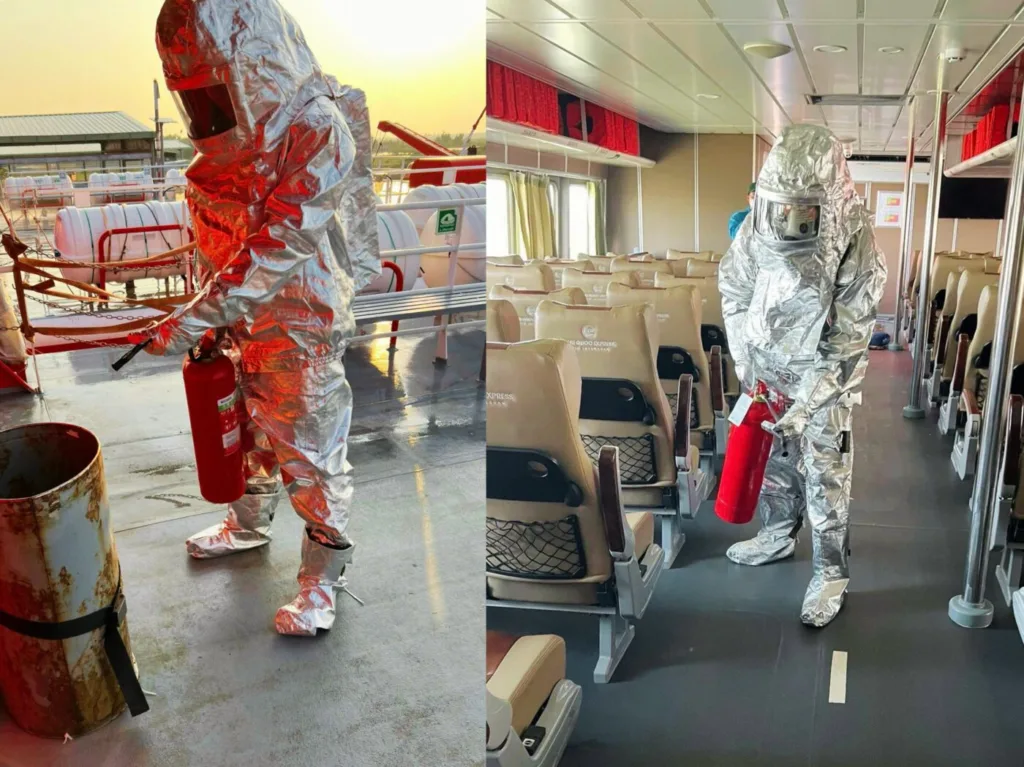
- Bring all assigned protective or fire fighting equipment: Crew members must be ready to take up duty upon arrival. suitable equipment. Firefighters must immediately put on fire-resistant clothing, SCBA breathing masks, flashlights, fire axes, etc.; the person in charge of the lifeboat must bring the key to open and lower the lifeboat, prepare ropes; the person in charge of first aid must prepare first aid kits, etc. All personal equipment such as hard hats, gloves, and life jackets (if outside on deck) must also be brought in to ensure the safety of the crew members while on duty.
- Assist passengers to safety: An important duty of a seafarer is to reassure and guide passengers. In the event of a fire, passengers may panic; therefore, crew members who are not directly involved in firefighting will spread out to the passenger areas to calm them down, gather them together and lead them to safety. muster station safety. The crew guides the escape route, helps the elderly and children put on life jackets if needed, and ensures that no one is left behind. During the journey, they also remind passengers to stay low if there is smoke, to move quickly but in an orderly manner, and to avoid jostling.
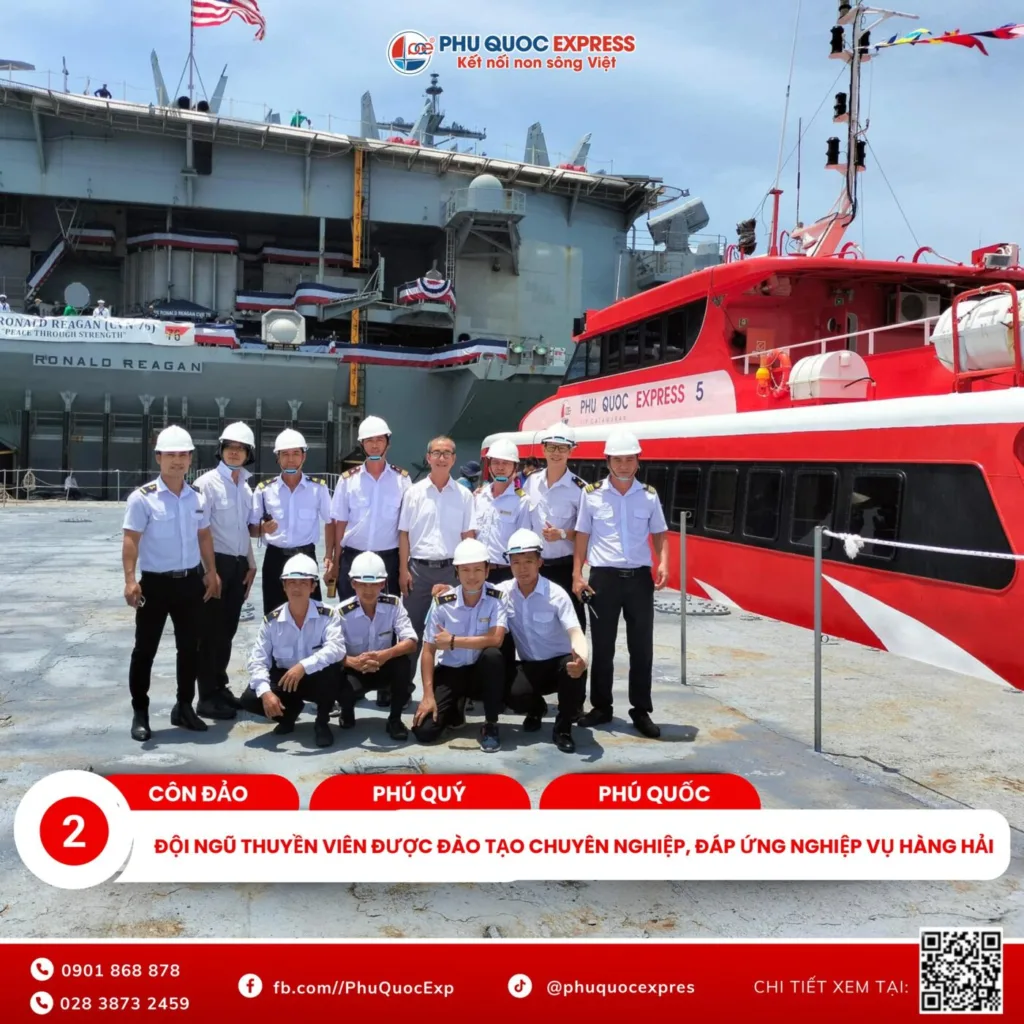
Thanks to clear division of tasks and thorough training, each Phú Quốc Express crew member clearly understands their role in an emergency. This discipline and professionalism help increase efficiency in incident handling, because the entire team works as one unified machine – right person, right job, right time.
5. Instructions for passengers in case of fire on board a boat
Although the ship has a well-trained crew, passengers on board also need to master some basic safety rules to protect yourself in case of an emergency. Here are some important instructions for passengers in case of a fire on board:
- Keep calm, don't panic: The first and most important thing is to try to stay calm. Panic will only make the situation worse, leading to jostling, pushing and shoving, causing injury or hindering crew members from performing their duties. Please take a deep breath, stay calm and focus on listening to the instructions.
- Follow crew instructions: Listen to announcements over the loudspeaker and follow all instructions from crew or officers. They are trained to handle emergencies and know the escape routes and safety equipment. For example, if you are asked to move to an adjacent compartment or onto an air deck, do so immediately. Absolutely do not separate from the group or act differently from the guide. because it may put you in danger or make rescue work difficult.
- Do not return to retrieve luggage or belongings: No matter how important your luggage is, human life is still above all. Do not re-enter a burning area to retrieve items – this could result in you becoming trapped in the fire or inhaling toxic smoke. Leave the danger zone as quickly as possible, Every asset is replaceable, but you are not..
- Wear life jacket as instructed when required: In case of emergency, passengers need to prepare to leave the ship. The crew will instruct passengers to put on life jackets. Please follow the correct procedure: Put your head and arms through the life jacket, zip or tie the straps securely, do not inflate the jacket until outside on deck (unless otherwise instructed). A life jacket will help you float if you have to abandon ship, so don't leave it unattended. If you are unsure how to put it on, ask a crew member or another passenger for help.
- Avoid breathing smoke: Smoke from a fire on a ship is often dense and contains many toxic gases (CO, CO₂,…) that can cause asphyxiation. Therefore, if you see smoke coming towards your area, use a wet towel (or any damp cloth) Cover your nose and mouth to filter out the smoke when breathing. Also, stay low when moving, because smoke tends to rise – the air near the deck is cleaner. Move quickly to a well-ventilated area or follow the crew's instructions to stay away from the source of the smoke.
In addition, passengers should pay attention to their surroundings and listen carefully. If you see someone else panicking, try to reassure or ask crew members to assist them. The calmness and cooperation of each passenger not only protects themselves but also contributes to the smooth and safe rescue operation for everyone.
6. Periodic training at Phú Quốc Express
With the motto "prevention is better than cure", Phú Quốc Express especially values regular training and drills on fire safety. In fact, SOLAS has made it clear that all seafarers must participate in regular monthly fire and lifesaving drills. The company has always followed this requirement even more strictly to ensure highest level of fluency and readiness of the crew on each train. At least once a month, Phú Quốc Express organized firefighting and evacuation drills with many different scenarios for crew members to practice. For example:
- Engine room fire scenario: Simulate an oil fire in the engine room – the most dangerous area. Crew members practice activating the on-site CO₂ fire suppression system, while a firefighting team wearing SCBAs enters with hoses and portable fire extinguishers to put out the fire. This exercise trains the ability to handle incidents in confined spaces, with lots of machinery and high temperatures.
- Fire scenario in passenger compartment: Suppose a fire breaks out in the passenger seating area (e.g. due to an air conditioning short circuit). The crew member must quickly instruct the passengers to cover their noses to escape the smoke, move to a safe compartment, and deploy a fire extinguisher to extinguish the fire on the seats or ceiling. Thereby, the skill passenger evacuation and extinguish the fire on the raised passenger deck.
- Night evacuation scenario: Suppose an emergency occurs at night, with the ship’s lights suddenly turned off. Crew members practice moving and performing tasks using only flashlights and emergency lights, guiding passengers in low visibility conditions. This exercise tests the emergency lighting system and the team’s ability to coordinate in more difficult conditions than during the day.
- Practice using fire prevention and life-saving equipment: Each exercise incorporates training in the use of safety equipmentCrew members take turns operating fire extinguishers (CO₂, powder, foam), opening fixed sprinkler system valves, activating fire pumps, wearing and using SCBA oxygen masks, operating lifeboats, releasing life rafts, etc. This practical practice ensures that when an emergency occurs, everyone is safe. proficient in operation on the device, without confusion or embarrassment.
Every rehearsal at Phú Quốc Express is closely monitored and evaluated based on SOLAS standards. Maritime safety experts or ship commanders will monitor the exercise, noting what went well and what needs improvement. After the exercise, the entire crew will meet to review the experience, re-evaluate the standard procedures and make adjustments if necessary. Thanks to the process Train – Evaluate – Improve This continuous, emergency handling capacity of the crew is always maintained at a high level and constantly improved.

7. Why can tourists feel secure when traveling by Phú Quốc Express?
With all the above preparations and safety commitments, passengers can rest assured when choosing to travel by Phú Quốc Express high-speed train. The main reasons include:
- Strictly comply with SOLAS – the world's highest maritime safety standards: Phú Quốc Express fully and comprehensively meets the requirements of SOLAS 1974 – a set of safety rules adopted by 164 countries around the world, governing ~99% global merchant fleet. This means that Phú Quốc Express ships are designed, equipped and operated in accordance with international safety standards, equivalent to prestigious shipping lines in the world.
- Modern fire fighting equipment: The ship is equipped with automatic smoke and heat detectors in the compartments, ship alarm for timely warning. Fully equipped fire fighting equipment includes CO₂ and powder fire extinguishers in many locations, fixed fire hose systems connected to pressure pumps, and automatic water spray systems (sprinklers) in important compartments. In particular, the engine room on the high-speed train is equipped with a fixed CO₂ fire fighting system, ready to be activated to extinguish the fire within the first few minutes if there is a machine fire. All of these devices are regularly inspected and maintained to always function well when needed.
- Professional crew, quick response: Phú Quốc Express crew members are not only experienced and qualified but also formal training on rescue safety. They understand the procedures, are proficient in using equipment and always maintain a high sense of responsibility towards passengers. In any emergency situation, this team will instant response, handle situations effectively thanks to skills accumulated through regular drills.
- Clear, standardized response process: From incident detection, alarm, fire fighting deployment to passenger evacuation instructions, everything is available. standard procedure and well-rehearsed. Each member knows what to do, and passengers are given basic instructions, so when a situation arises, chaos is minimized. This standardization ensures everyone on board – crew and passengers alike – acted correctly and safely.
It can be said that the incident fire on boat is an emergency situation that requires a quick and accurate response. However, with High Speed Train Phu Quoc Express, tourists can be completely assured that all risks have been anticipated and effective countermeasures have been prepared. The international standard safety system, along with a team of experienced and skilled crew members, is a solid "shield" to protect tourists on every voyage. When everyone on board - from the captain, crew members to passengers - understands and correctly implements the handling measures, each trip will always be an experience. safe and memorable on the vast ocean.
