



Cù Lao Câu (also known as Hon Cau or Hon Câu) is a small island measuring approximately 140 hectares located between Hon Cau Marine Reserve, off the coast of Lien Huong Commune, Lam Dong Province. Prior to July 2025, this area was under Tuy Phong District, Binh Thuan Province. There are no residents on the island, no resorts, no electricity grid. In return, visitors have clear water, bottomless sea, and pristine coral reefs that are more than 2 kilometers long and the season for sea turtles to come ashore to lay eggs.
The article updates the important changes for 2026 when traveling to Cu Lao Câu: the new administrative boundaries, licensed boat docks, tour costs, and regulations for staying overnight. Thanks to this, you can plan accurately before packing your bags and setting off.
Avoid confusing the location: Cù Lao Câu is also known to the locals as “Hòn Cau”. However, “Hòn Cau” is also the name of an island belonging to the Côn Đảo archipelago (HCMC). If you are looking for Hòn Cau in Côn Đảo, please see here. Côn Đảo boat rental prices and The guide to Côn Đảo National Park.
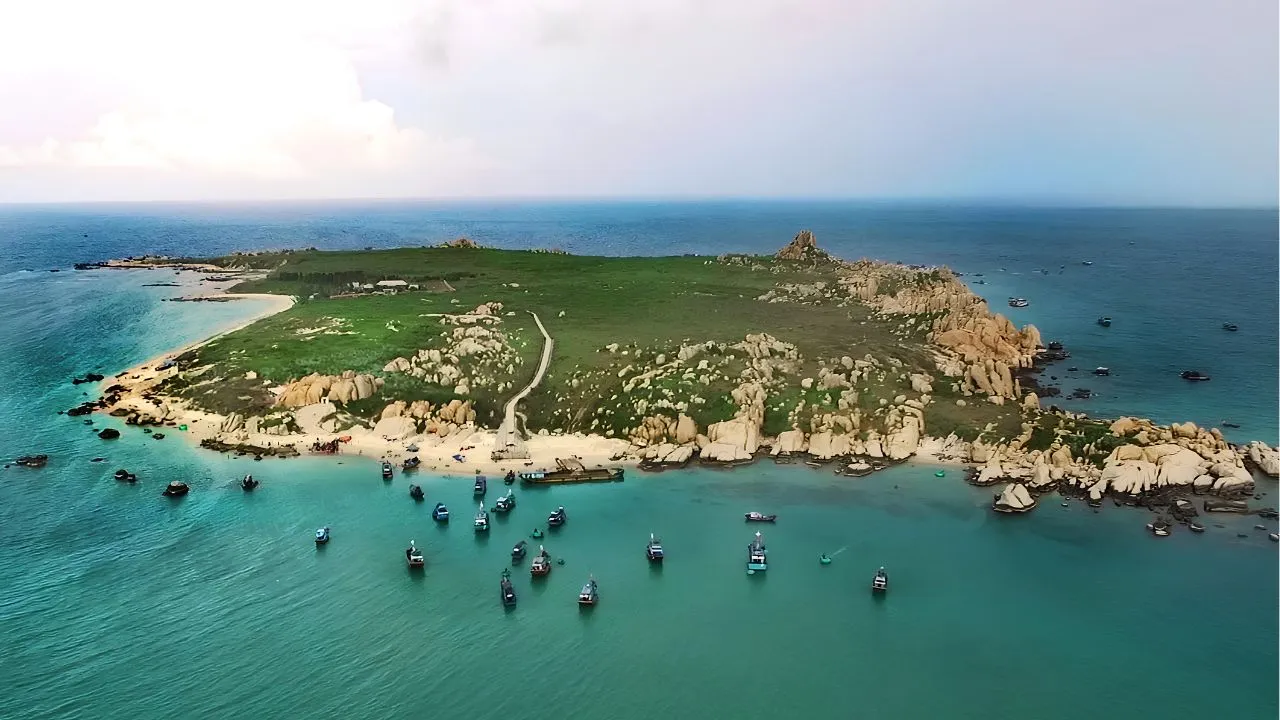
Quick information about Cu Lao Chau
| Categories | Information |
|---|---|
| Other names | Hòn Cau, Hòn Câu |
| Location | Off the coast of Lien Huong commune, Lam Dong province (Tuy Phong district, former Binh Thuan province) |
| Distance | Approximately 8–10 km from the mainland, and approximately 110 km from the center of Phan Thiết |
| Starting port | Hoàng Phúc Bình Thuận inland port (Liên Hương) |
| Time to get off the island | About 30 minutes by tourist train |
| Reference costs | One-day tour costs about 650,000 VND per person, two-night tour costs about 1,000,000 VND per person. |
| Beautiful season | Approximately March to August of the lunar calendar |
| The turtle season is coming | May to October |
| Staying | There are no hotels. Only registered camping or staying in a spare room when there is a power outage. |
Where is Cu Lao Cu (Hòn Cau)?
Location: Now belongs to Lien Huong Commune, Lam Dong Province
Cu Lao Cau is located approximately 8–10 km from Lien Huong Beach, and approximately 110 km northeast of Phan Thiết city. After the province of Binh Thuan merged with Lam Dong province and abolished the sub-district system (from July 1st, 2025), the island was determined to be within the administrative boundaries of Lien Huong Commune, Lam Dong province. This information is recorded on the official channel of Hon Cau Marine Reserve.
Many old articles still mention “Tuy Phong, Bình Thuận”. It’s still the same island, only the administrative unit is different. When you look up the map, you can type “Cù Lao Câu” or “Hòn Cau Liên Hương”.
Why is it called Cu Lao Câu, Hon Cau?
According to local residents, the waters around the island used to be abundant in sea cucumbers, a type of seaweed. Therefore, fishermen called the island Cù Lao Câu, gradually changing the name to Hòn Câu, Hòn Cau.
What is special about Hon Cau Marine Reserve?
| Index | Information |
|---|---|
| Year of foundation | 2010 (Decision 2606/QĐ-UBND of Binh Thuan province) |
| Total area of the protected area | Approximately 12,500 hectares, including Cu Lao Chua Island, the core area, buffer zone, and ecological restoration area |
| The area of the island | Approximately 140 hectares |
| Corals | The original coral reef is more than 2 km long, with about 225–234 species depending on the source; it is also home to the highest concentration of soft coral in Vietnam (more than 65 species). |
| Other marine creatures | 324 species of fish, 119 species of mollusks, 46 species of crustaceans and reptiles |
| Sea turtles | One of the three marine reserves in Vietnam has turtles laying eggs, along with Côn Đảo and Mount God. |
| Ranking | Cù Lao Câu (Hòn Cau) Scenic Area was classified as a provincial monument in July 2023 |
The reserve has sometimes recorded more than 20 dolphins appearing near Cu Lao Câu island. This is a sign that the marine ecosystem here is being well preserved.
Which season is best for Cù Lao Câu?
The Cù Lao Câu area experiences two distinct seasons based on the wind direction. The records differ by about a month. The table below is converted to the calendar system to make it easier for you to plan:
| Time (Lunar calendar) | Characteristics of the sea | Suggestion |
|---|---|---|
| March – June | South wind, calm sea, clearest water | The best place to swim and snorkel is the sea |
| May – October | The sea turtle season comes ashore to lay eggs | Go from May to August if you want to combine snorkeling and turtle watching. |
| July – September | Still able to walk, sometimes there is a thunderstorm | Monitor weather forecasts 1–2 days in advance |
| October – February the following year | Northerly winter winds, rough seas | Restrictions on travel; the ship has not been allowed to depart for many days |
The boat can only carry passengers to Cu Lao Câu when the border checkpoint allows. During the windy season, you should keep your schedule flexible and ask carefully about the policy for rescheduling or refunding when booking a tour.

How to get to Cu Lao Câu Island
Stage 1: Arrive at Lien Huong Commune
- From Ho Chi Minh City: Take the bus at the Miền Đông Bus Terminal, choose the route to Phan Rang (now in Khanh Hoa) or Tuy Phong, then tell the driver to drop you off at Lien Huong. Many groups choose to take the night bus to get there early in the morning, just in time for the early train to Cù Lao Câu.
- From Phan Thiết: Drive about 110 km along National Highway 1 in a north direction.
- Driving by yourself: You can park your car in the parking area before going to the island. You should ask the tour company about the parking spot when you make your reservation.
Stage 2: From Lien Huong pier to the island
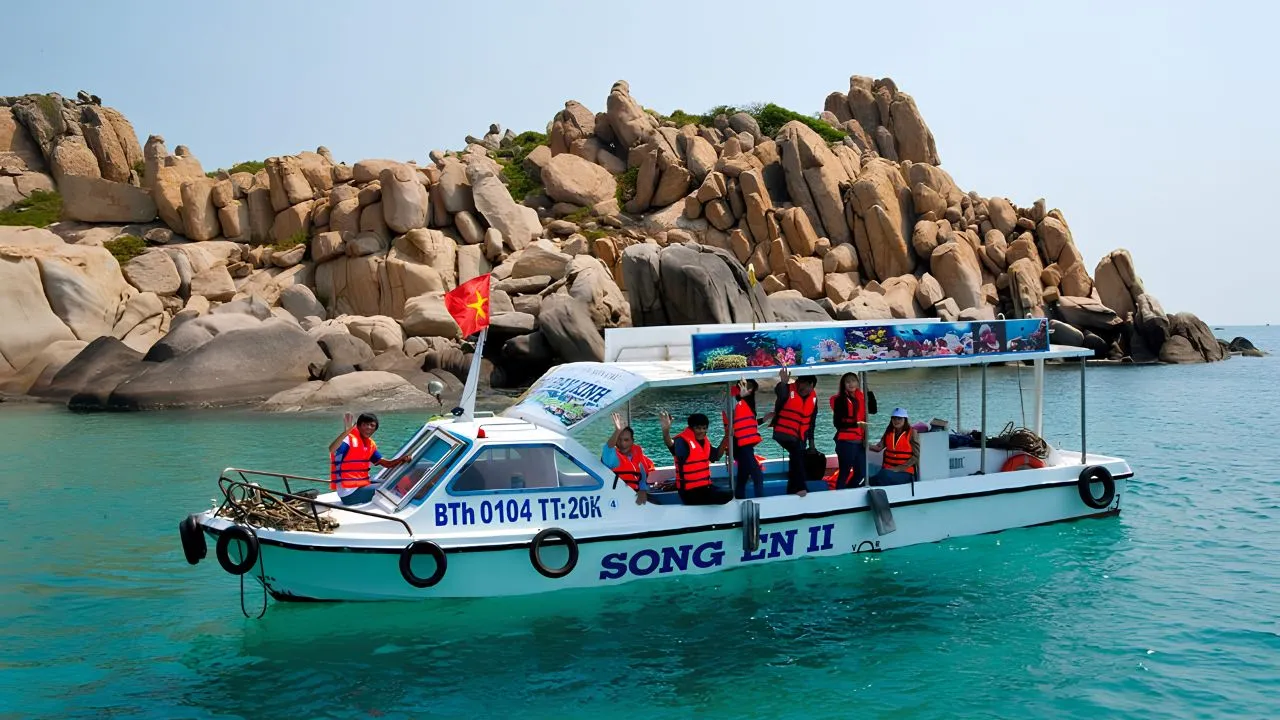
As of August 2026, Hoang Phuc Binh Thuan inland port is the passenger port authorized by the commune People's Committee of Lien Huong to operate on the Lien Huong – Hon Cau (Cu Lao Cau) route. It takes about 30 minutes for tourist boats to reach the island.
Procedures you need to know:
- Bring your CCCD. The shipping company must make a list of passengers before boarding the ship.
- The ship only docks when the border checkpoint allows. On rough seas, the trip may be canceled.
- Wearing a life jacket throughout the journey.
Some old articles guide how to take a ride on a fishing boat in Phuoc Thhe or Ca Na. This method is not recommended anymore. You should choose a means of transport that is licensed for passenger transportation to ensure safety and have insurance.
Should I go to Cu Lao Câu on a tour or on my own?
| Criteria | Tour in Lien Huong | Self-sufficient |
|---|---|---|
| Suitable | First-time visitors, families, small groups | The group has experience traveling to the island |
| Customs procedures, list of guests | The tour agency is responsible | You must contact the licensed vehicle yourself. |
| Food and drink, diving, guided tours | Usually already included | Prepare yourself |
| Stay overnight | There is a 2N1D tour already registered | Difficult to organize oneself |
Because Cu Lao Câu Island is located within a protected area and a sea border zone, Going on a tour is the most convenient and safest option currently.
How much does it cost to go to Cu Lao Cu?
| Categories | Reference level |
|---|---|
| 1-day tour to Lien Huong (round-trip boat, guide, lunch, diving) | About 650,000 VND per guest |
| 2-day 1-night camping tour (boat, tent, BBQ dinner, breakfast) | Around 1,000,000 VND per guest |
| Full-day package tour from Ho Chi Minh City | Approximately 800,000 – 1,200,000 VND per guest |
| 2N1D All-Inclusive Tour from Ho Chi Minh City | Approximately 1,500,000 – 2,000,000 VND per guest |
| Fresh water for bathing on the island | Around 30,000 – 50,000 VND per bottle |
Prices compiled from tour operators for 2026 may change depending on the season and the number of guests. You should ask about the exact price before booking.
What can you do in Cu Lao Cu? 10 experiences worth trying
Cua Lao Câu has no amusement park or entertainment services. The island's appeal lies in its clear sea, pristine rocks, and almost intact ecosystem.
1. Beach bathing at Bai Tien
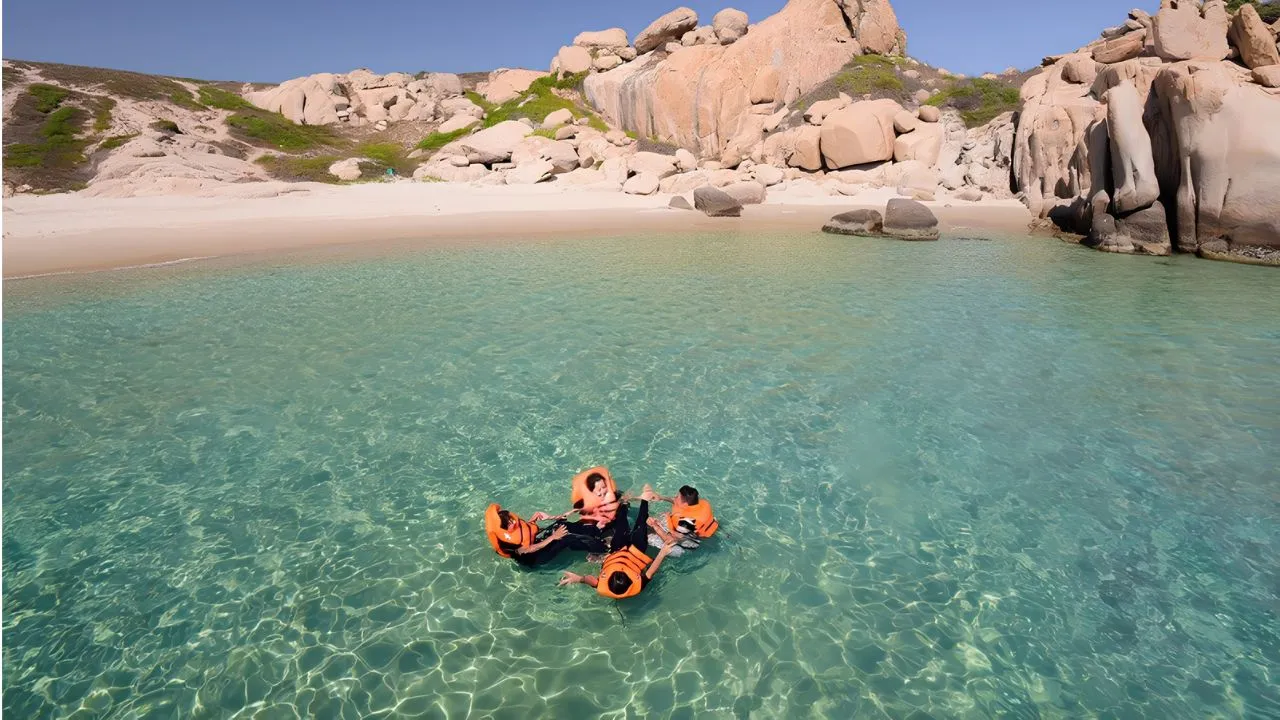
Tiên Beach is the most beautiful beach in Cu Lao Câu. The beach is located in a small bay surrounded by large rocks, so the water is quite calm. The water is so clear that standing on the shore you can still see the bottom of the sand; many visitors call this “a natural swimming pool” amidst the sea.
2. Diving to observe pristine coral reefs
The coral reef around Cu Lao Câu is located in shallow waters; all you need is a snorkel, fins, and a life jacket to admire the corals and the schools of fish. This is also a suitable experience for those who are not familiar with swimming. Follow the guide’s instructions and absolutely do not stand or step on the coral.
3. Watch sea turtles come ashore to lay eggs (May – October)
During the breeding season, sea turtles (mainly sea turtles) climb up the sand on the island at night to lay their eggs. The reserve’s team will collect the eggs in a safe place and release the baby turtles back into the sea. To participate, you must: Pre-registration with the management of the Conservation Area or an eco-tour unit. Not every night do you see turtles coming ashore.
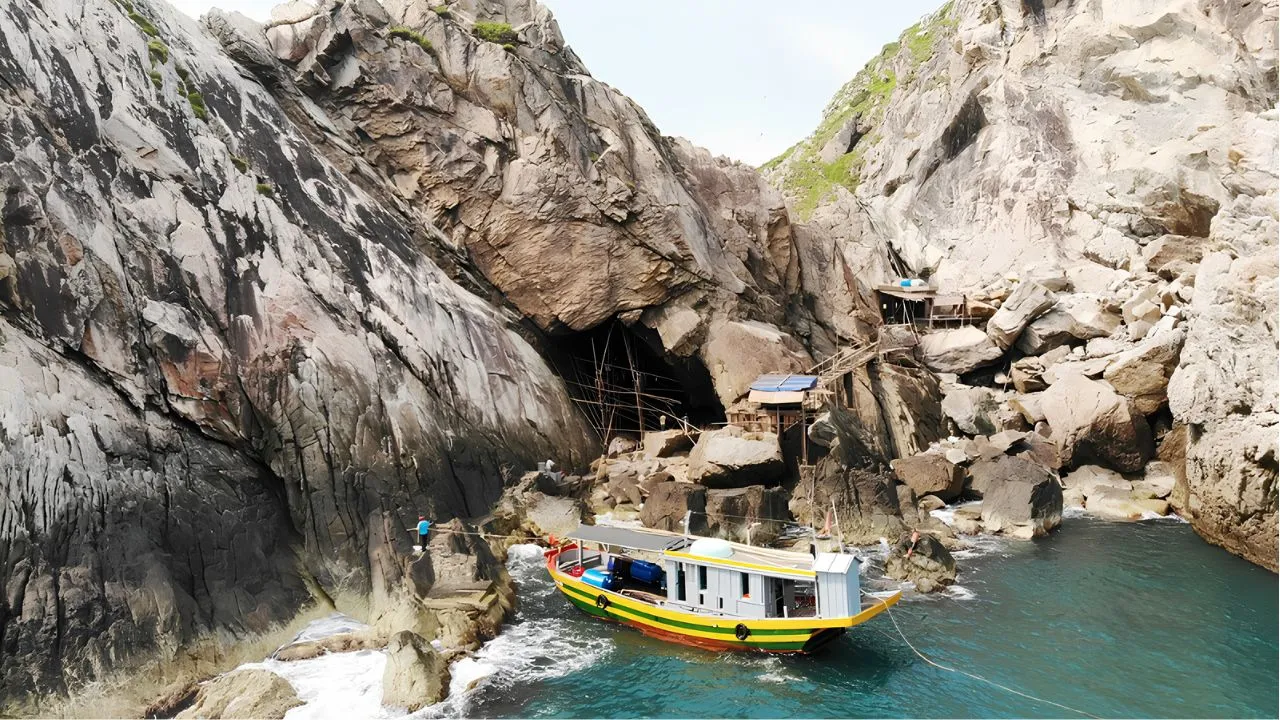
4. Hang Yến
Hang Yến is located amidst steep cliffs where many hornbills used to nest. The entrance to the cave is covered with many boulders, so wear shoes or sandals with good traction.
5. Hang Tình Yêu
This is a natural rock crevice located between stacked rocks, which hikers named it based on its shape. You need to climb over a few boulders to get there; it’s not too difficult, but it’s best to go slowly and carefully.
6. Khe Sung Sướng
Khe Sung Sướng is a small stream sandwiched between two large cliffs. Crossing the rock gully is a fun experience that many young groups love when exploring Cu Lao Câu.
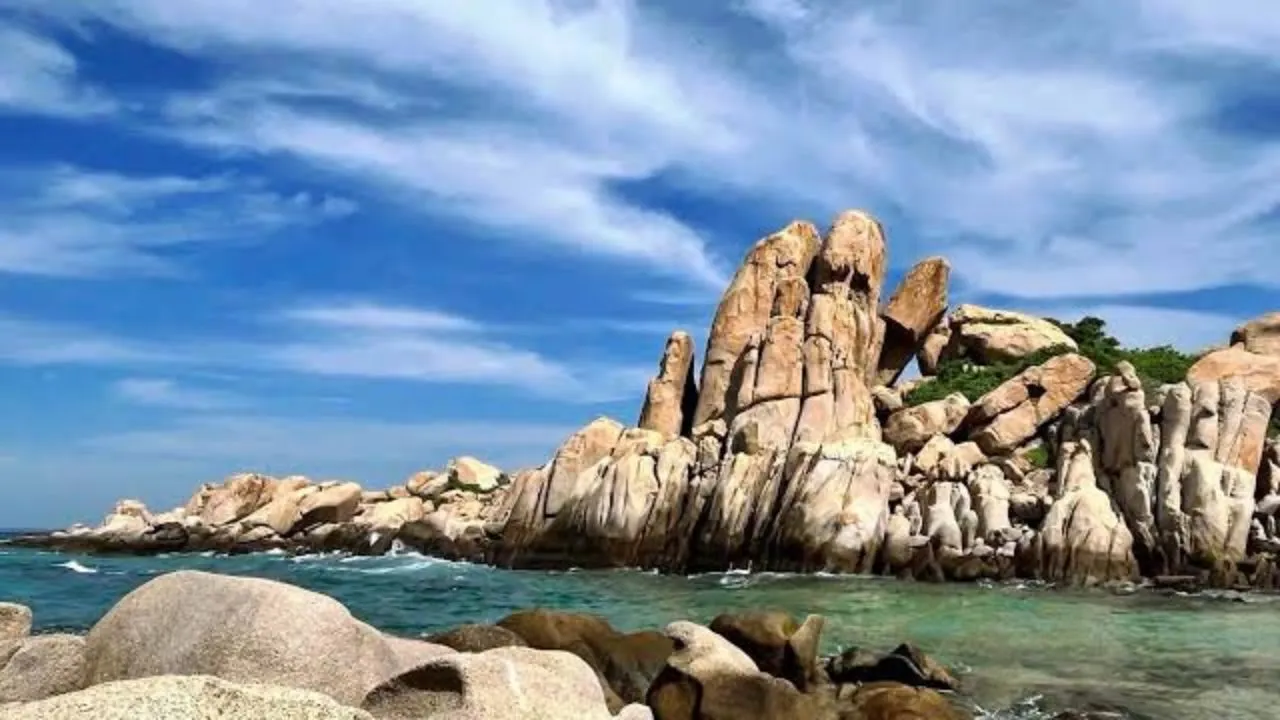
7. Hang Ba Hòn
Three large boulders stand upright against each other to form a cave with a strange shape. This is a photo spot that many visitors come to.
8. Gia Long Well
This is a rare freshwater well on Cu Lao Câu Island, which is said to be associated with the Nguyen Dynasty who fled to this area during the time of the famine. The well’s water is mainly used for drinking, and is not enough for bathing.
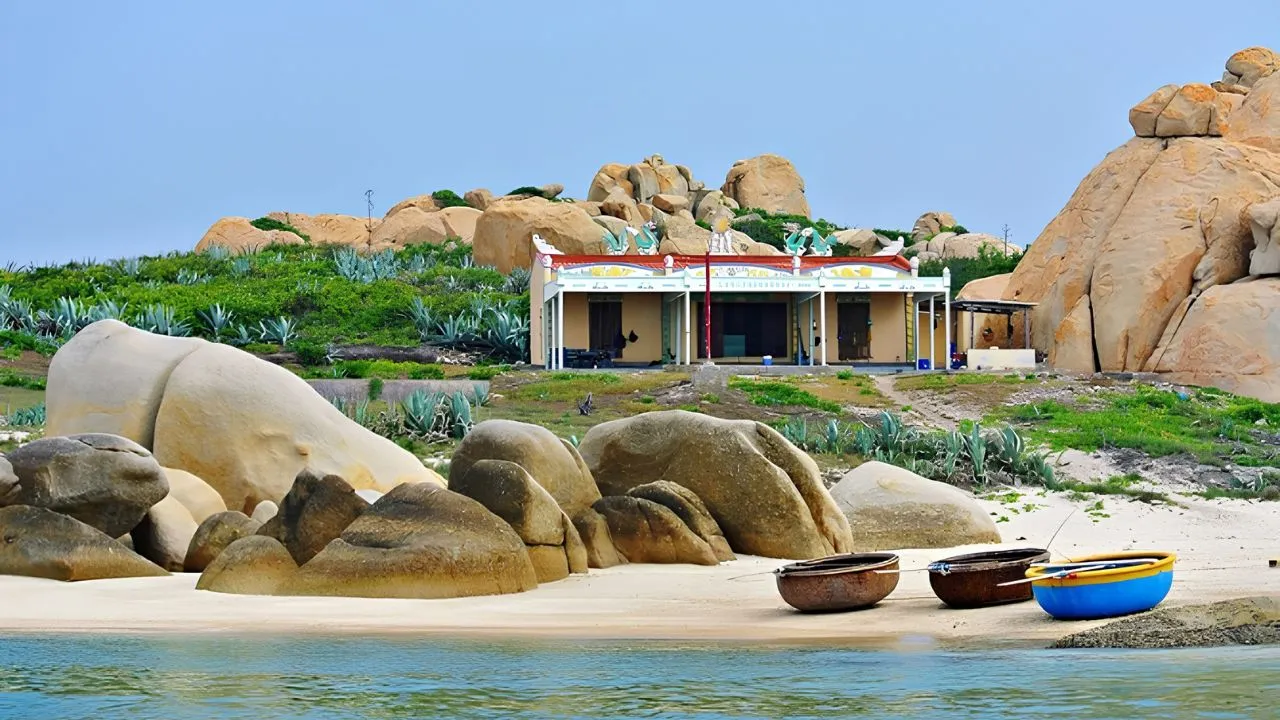
9. Temple of the God Nam Hai
The small temple dedicated to the God Nam Hai (the fish god) is a spiritual place for local fishermen, where they pray for safety before embarking on their voyages. The atmosphere here is peaceful. When visiting, you should dress modestly.
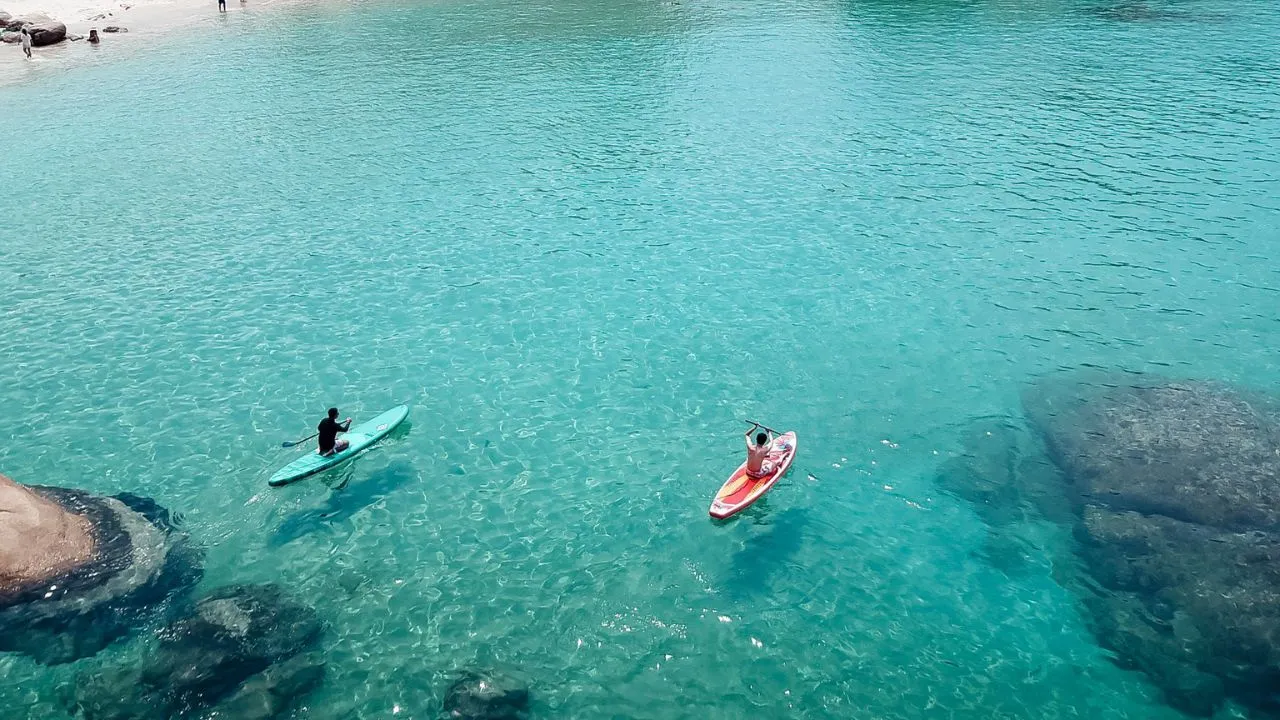
10. SUP paddling and taking photos of the pristine rocky beach
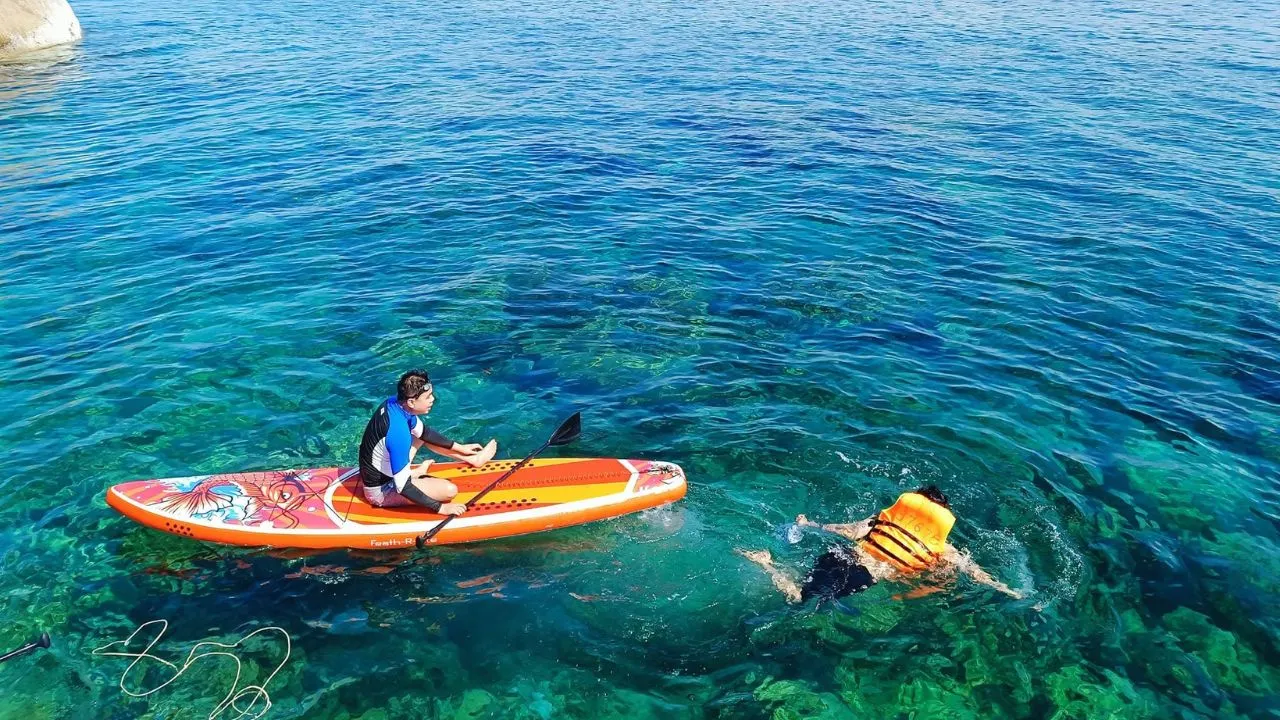
Around Cu Lao Câu Island there are thousands of blocks of primordial rock of various shapes, eroded over time by the waves. Some tour operators offer SUP boards for rent so visitors can paddle along the edge of the island and admire the rocks and the sea from a low angle.
The itinerary suggests going to Cu Lao Cuu
1-day itinerary
| Time | Work |
|---|---|
| 06:00 – 06:30 | Gathering at Lien Huong Wharf, making a list of guests |
| 07:00 | Get on the boat; it takes about 30 minutes to get to Cu Lao Câu Island. |
| 07:30 – 10:30 | Walking along the trails: Yến Cave, Love Cave, Sung Sướng Grotto, Ba Hon Cave, Gia Long Well, Thần Nam Hải Temple |
| 10:30 – 12:00 | Swimming at Bai Tien Beach, diving to see the coral reefs |
| 12:00 – 13:30 | Have lunch, rest |
| 13:30 – 15:00 | SUP paddling, taking photos of the rocks |
| 15:00 – 15:30 | Getting on the train to return to the mainland |
2-day 1-night itinerary (camping)
- Day 1: Go to Cù Lao Câu in the morning, tour as a 1-day itinerary. In the afternoon, watch the sunset, and in the evening have seafood BBQ. If you are visiting during the turtle season and have signed up, you can follow the guide from the conservation staff to observe the turtles.
- Day 2: Wake up early to catch the sunrise, dive the reef in the morning when the water is clearest. Return to land before noon.
How do you eat when you go to Cu Lao Câu?
Eating on the island
There are no self-service restaurants on Cu Lao Câu island. Meals are usually provided by the tour operator or the only service point on the island. Please bring your own water, snacks, and take all trash back to the mainland.
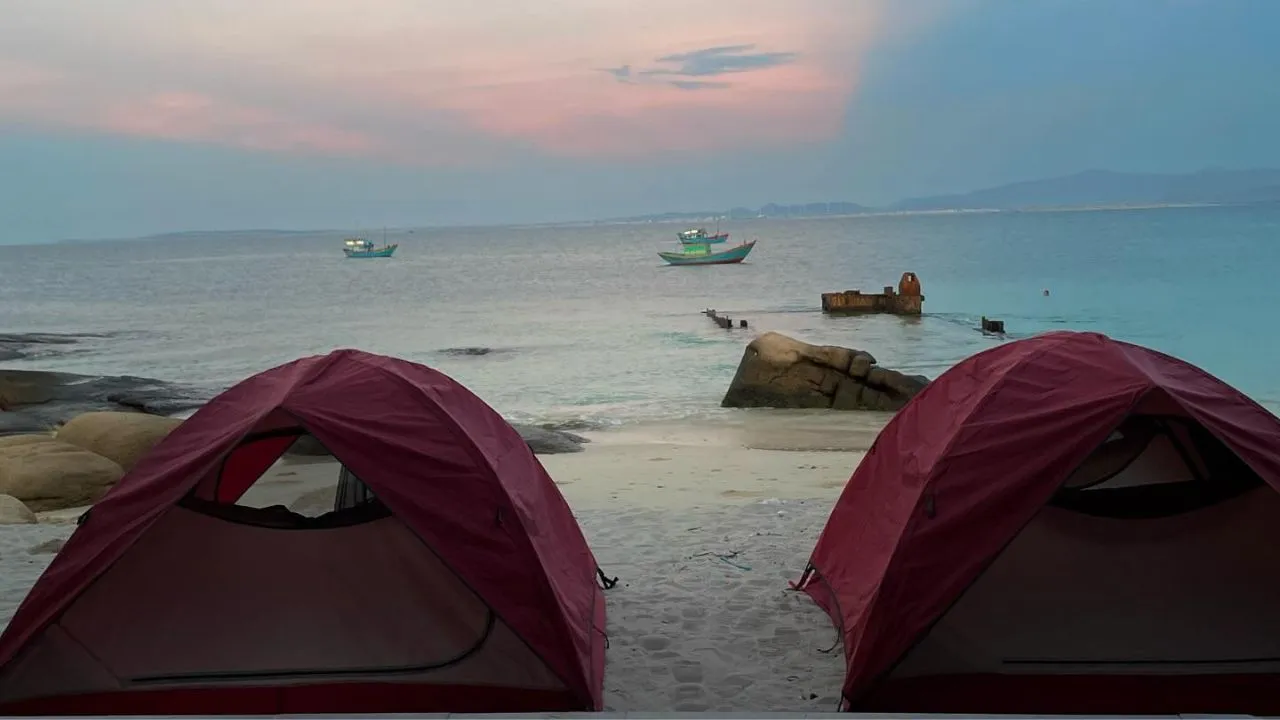
Có được ở lại qua đêm trên đảo không?
Có, nhưng phải đi theo đơn vị có đăng ký với lực lượng chức năng. Trên Cù Lao Câu không có khách sạn hay nhà nghỉ. Du khách chủ yếu cắm trại trên bãi cát với sự hỗ trợ của nhân viên dịch vụ. Ban quản lý chỉ có một số phòng dự phòng cho trường hợp khách bị kẹt lại do biển động. Bạn không nên tự ý mang lều ra đảo cắm trại.
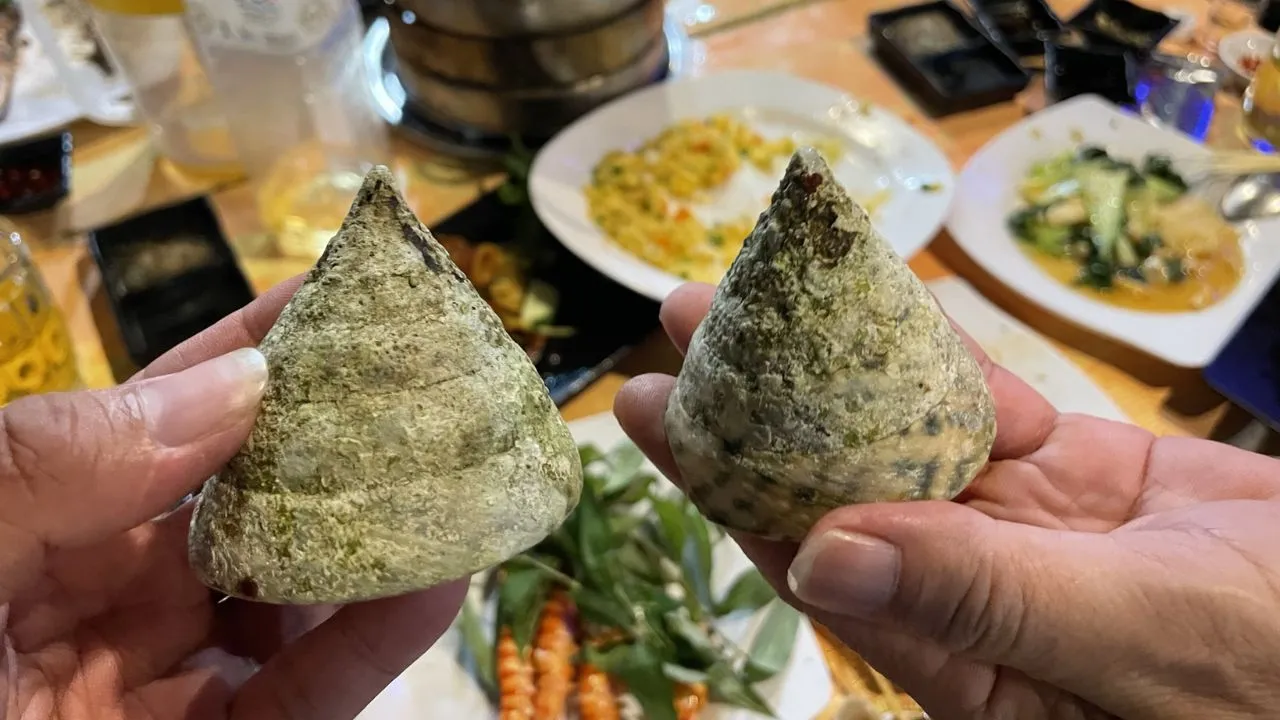
Hải sản nên thử ở đất liền
Trước hoặc sau chuyến đi Cù Lao Câu, bạn có thể ghé các quán hải sản quanh khu cảng cá Liên Hương để thưởng thức hải sản tươi của vùng biển Bình Thuận cũ, như các loại ốc, cua, mực và cá đánh bắt trong ngày.
Kết hợp Cù Lao Câu với đảo Phú Quý
Nếu có thêm 2–3 ngày, bạn có thể ghép Cù Lao Câu với đảo Phú Quý thành hành trình biển đảo Lâm Đồng trọn vẹn. Sau khi rời Liên Hương, bạn di chuyển khoảng 110 km về Phan Thiết, rồi đi tàu cao tốc từ Cảng Vận tải Phan Thiết ra Phú Quý, mất khoảng 2–2,5 giờ. Xem lịch tàu Phan Thiết – Phú Quý and the price of high-speed train tickets Phú Quý của Phú Quốc Express để chủ động lịch trình.
Lưu ý quan trọng khi đi Cù Lao Câu
- Nước ngọt: Đảo không có nước máy, nước sinh hoạt chủ yếu lọc từ nước biển. Hãy mang đủ nước uống và chuẩn bị nước ngọt để tắm.
- Điện và sóng điện thoại: Đảo chưa có điện lưới, sóng điện thoại chập chờn. Hãy sạc đầy pin dự phòng trước khi ra đảo.
- Rắn: Khi đi ban đêm, mang giày kín và mặc quần dài, đi đúng lối mòn có sẵn, tránh dựng lều sát bụi rậm.
- Bảo tồn: Không bẻ hay giẫm lên san hô, không bắt sinh vật biển, không làm phiền rùa mẹ. Hãy dùng kem chống nắng thân thiện với rạn san hô.
- Khu vực quân sự: Chỉ đi lại trong phạm vi hướng dẫn viên cho phép.
- Shoes: Chọn loại có đế bám tốt vì nhiều đoạn phải đi trên đá.
- Rác thải: Mang toàn bộ rác, đặc biệt là đồ nhựa, về lại đất liền.
Câu hỏi thường gặp về Cù Lao Câu
Cù Lao Câu thuộc tỉnh nào?
Cù Lao Câu (Hòn Cau) hiện thuộc xã Liên Hương, tỉnh Lâm Đồng. Trước tháng 7/2025, đảo thuộc huyện Tuy Phong, tỉnh Bình Thuận.
Cù Lao Câu và Hòn Cau có phải là một không?
Có. Cù Lao Câu, Hòn Cau và Hòn Câu là các tên gọi khác nhau của cùng một hòn đảo ngoài khơi xã Liên Hương.
Cù Lao Câu (Hòn Cau Lâm Đồng) khác Hòn Cau Côn Đảo thế nào?
Đây là hai hòn đảo khác nhau. Cù Lao Câu (Hòn Cau Lâm Đồng) nằm ngoài khơi Liên Hương, đi tàu từ đất liền. Hòn Cau Côn Đảo là đảo vệ tinh trong quần đảo Côn Đảo, đi cano từ thị trấn Côn Sơn. Xem thêm bài về cano Côn Đảo.
Có được cắm trại qua đêm trên Cù Lao Câu không?
Được, nếu đi theo đơn vị tour có đăng ký với lực lượng chức năng. Du khách không nên tự ý mang lều ra đảo cắm trại.
Đi Cù Lao Câu có mất vé tham quan không?
Chi phí thường được gộp trong giá tour, gồm tàu khứ hồi, hướng dẫn viên và đồ lặn. Bạn nên hỏi đơn vị tour về các khoản phí phát sinh trên đảo trước khi đặt.
Không biết bơi có lặn ngắm san hô ở Cù Lao Câu được không?
Được. San hô ở Cù Lao Câu nằm ở vùng nước nông gần bờ. Bạn chỉ cần mặc áo phao, đeo kính lặn và đi theo hướng dẫn viên.
Đi Cù Lao Câu tháng 11, tháng 12 được không?
Đây là mùa gió Đông Bắc, biển thường động và nhiều ngày tàu không được xuất bến. Nếu vẫn muốn đi, hãy theo dõi dự báo thời tiết, đặt tour có chính sách dời lịch và chỉ ra đảo khi biên phòng cho phép.
Trên đảo Cù Lao Câu có điện và sóng điện thoại không?
Đảo chưa có điện lưới, sóng điện thoại yếu và không ổn định. Hãy xem chuyến đi như một dịp “detox công nghệ” đúng nghĩa.
Cù Lao Câu phù hợp với những ai muốn tạm rời phố thị để sống chậm vài giờ giữa biển xanh, đá nguyên sinh và một hệ sinh thái đang được bảo vệ nghiêm ngặt. Chọn đúng mùa, đi đúng bến và tôn trọng quy định của khu bảo tồn là đủ để chuyến đi an toàn và đáng nhớ.
