
Ho Quoc Pagoda: A spiritual place "leaning on the mountain and facing the water" at Phú Quốc

Ho Quoc Pagoda Phú Quốc

Ho Quoc Pagoda Phú Quốc (also known as Truc Lam Ho Quoc Zen Monastery) is one of the most impressive spiritual destinations on Phú Quốc island. Located halfway up the mountain and facing the blue ocean, the pagoda possesses a majestic landscape "leaning on the mountain facing the water" that is rarely compared to any other place. Not only is it the largest pagoda on Phú Quốc island as well as the entire Southwest region, Ho Quoc Pagoda also attracts tourists by its ancient architecture of the Ly - Tran dynasties and its sacred, peaceful atmosphere. The following article will provide detailed information about Ho Quoc Pagoda - from its history, architecture, sightseeing experiences, to cuisine and resorts around this famous pagoda area. Let's explore Ho Quoc Pagoda Phú Quốc - a sacred spiritual place in the middle of Ngoc Island, and pocket useful experiences for your upcoming trip.

Ho Quoc Pagoda Phú Quốc

General introduction to Ho Quoc Pagoda Phú Quốc

  • Address: Suoi Lon Hamlet, Duong To Commune, City Phú Quốc, Kien Giang Province, Vietnam. (~25km south of Duong Dong town center, ~10km from International Airport Phú Quốc)
  • Opening hours: 6:00 – 18:00 daily (visitors can freely visit and worship)
  • Ticket price: Free (visitors can make a donation if they want to contribute to the maintenance of the temple)
  • Other names: Truc Lam Ho Quoc Zen Monastery (belonging to the Truc Lam Yen Tu Zen sect system.
  • Outstanding features: The largest coastal pagoda in the Mekong Delta, with its back leaning against the mountains and forests, facing straight out to the sea; traditional ironwood architecture from the Ly - Tran dynasties; peaceful space, poetic landscape like a fairyland.

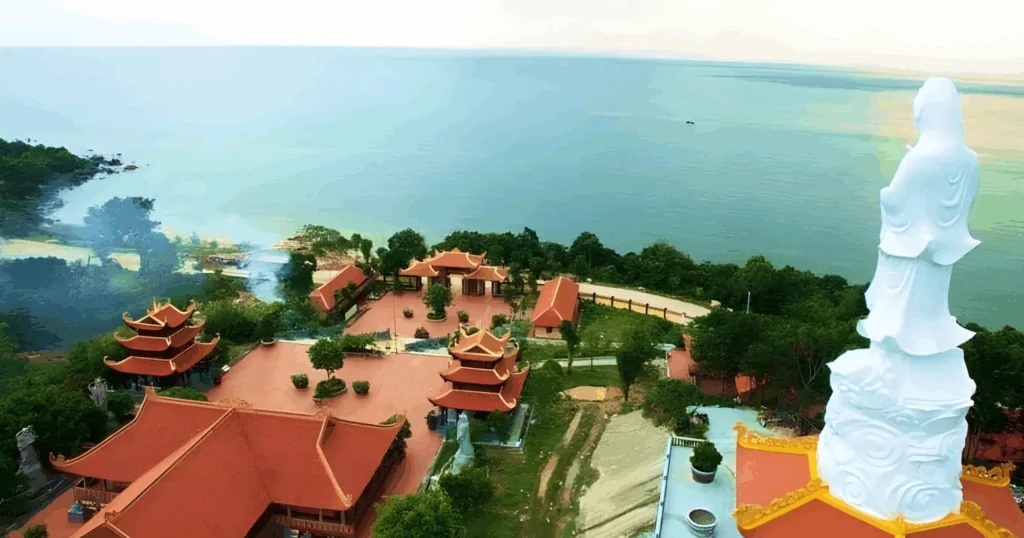
Ho Quoc Pagoda Inaugurated in 2012, located in a spiritual tourism project complex of up to 110 hectares in the South of the island Phú Quốc. The temple grounds alone occupy about 12 hectares, including many massive spiritual works. Coming to Ho Quoc Pagoda, visitors will feel the solemnity and peace: the temple bell echoes between the mountains and rivers, blending with the murmuring sound of the waves and the sound of the wind through the forest canopy. The open and spacious landscape, the blue of the sea and sky blends with the immense green of the mountains and forests, creating a fresh, peaceful atmosphere that helps the soul relax. Therefore, this place not only attracts monks and Buddhists to worship but is also an attractive tourist destination for domestic and international visitors when coming to Ngoc Island Phú Quốc.

Ho Quoc Pagoda Phú Quốc

History of the formation of Ho Quoc Pagoda

Despite its ancient appearance, Ho Quoc Pagoda Phú Quốc actually has a fairly new history. The project began construction on October 14, 2011 and was completed after only 14 months of rapid construction. On December 14, 2012, Ho Quoc Pagoda officially held its inauguration ceremony, becoming the first pagoda of the Truc Lam Yen Tu Zen sect on Phú Quốc island. To build this large-scale pagoda, more than 1,000 workers worked tirelessly with a total investment of about 100 billion VND (of which 80 billion VND was for building the pagoda and 20 billion VND for leveling and building roads). The project had the cooperation of the Kien Giang Provincial Buddhist Sangha Executive Committee and many Buddhists and benefactors at home and abroad.

The name “Ho Quoc” of the pagoda has a special meaning. According to Venerable Thich Thong Kien (abbot of the pagoda), “Ho Quoc” means protecting the country, preserving the sacred borders of the nation – especially the southernmost sea and island area of the Fatherland. Choosing this name shows the wish to send peace to the country and affirm Vietnam’s territorial sovereignty on the island Phú Quốc. Right from its inception, Ho Quoc Pagoda was expected to become the new spiritual and cultural center of the island, contributing to spreading good Buddhist values and attracting tourists from all over to Phú Quốc. In the period 2013-2014 after its inauguration, the pagoda continued to expand its landscape works, completing the campus to serve the increasing number of visitors.

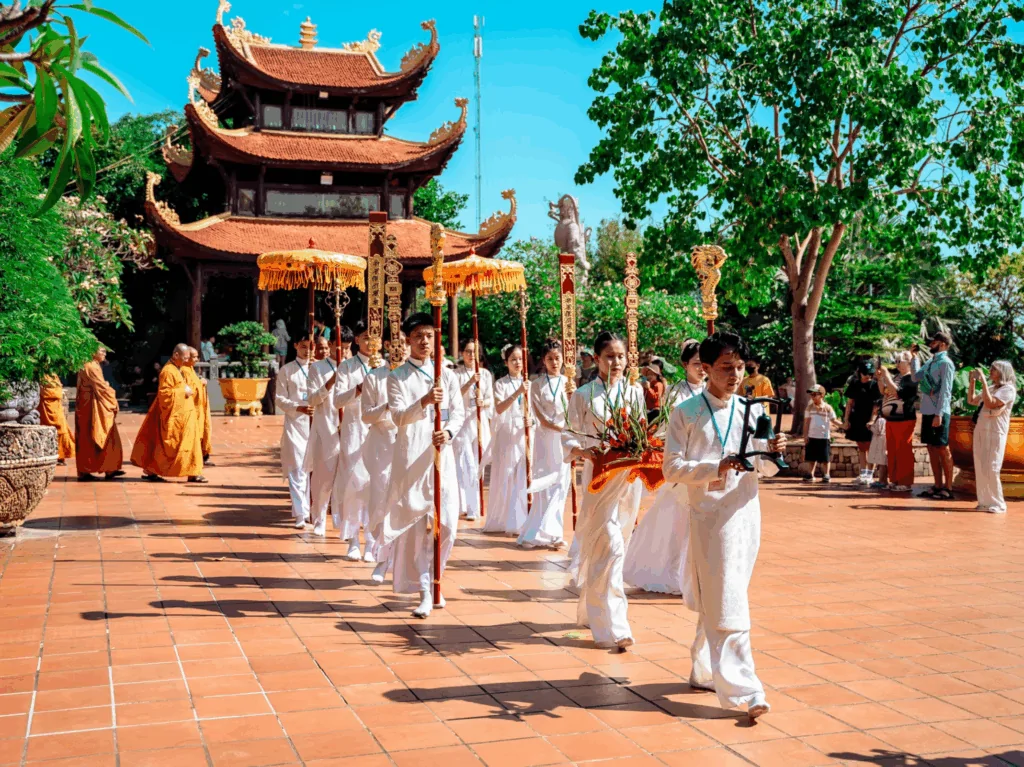
Although it does not have hundreds of years of history, Ho Quoc Pagoda still possesses great cultural and spiritual value. The pagoda is considered a symbol of connecting the quintessence of Buddhism from the North to the South, a spiritual support for the people of Ngoc Island, and at the same time a new and attractive cultural tourist destination. On major holidays (such as the full moon, the first day of the lunar month or the Lunar New Year), the pagoda often organizes solemn worship activities, attracting a large number of Buddhists and tourists to offer incense and pray for peace. Ho Quoc Pagoda Phú Quốc, although "young", has quickly become a prominent scenic spot, contributing to enriching the Phú Quốc tourism map.

Ho Quoc Pagoda Phú Quốc

Unique architecture and landscape at Ho Quoc Pagoda

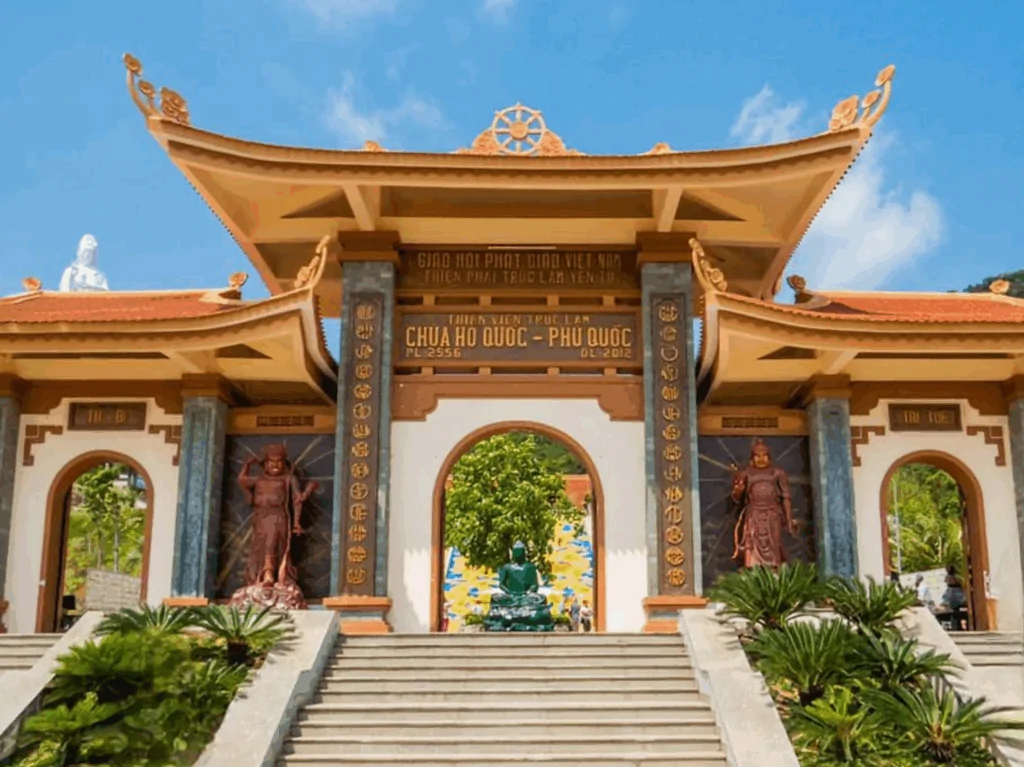
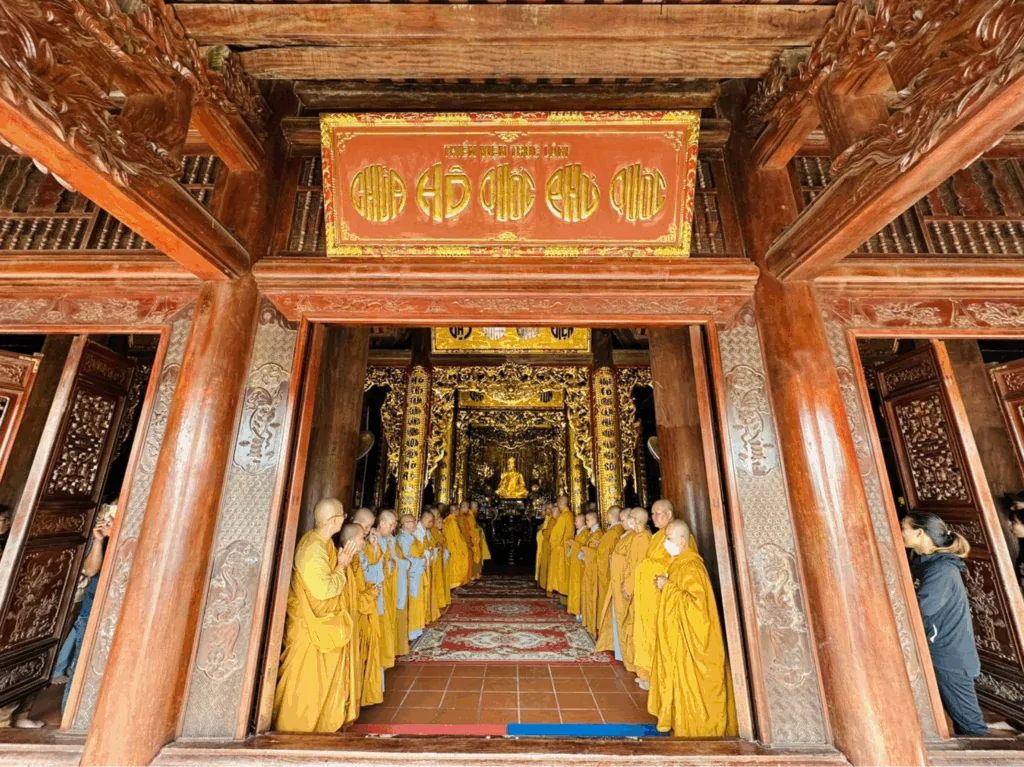
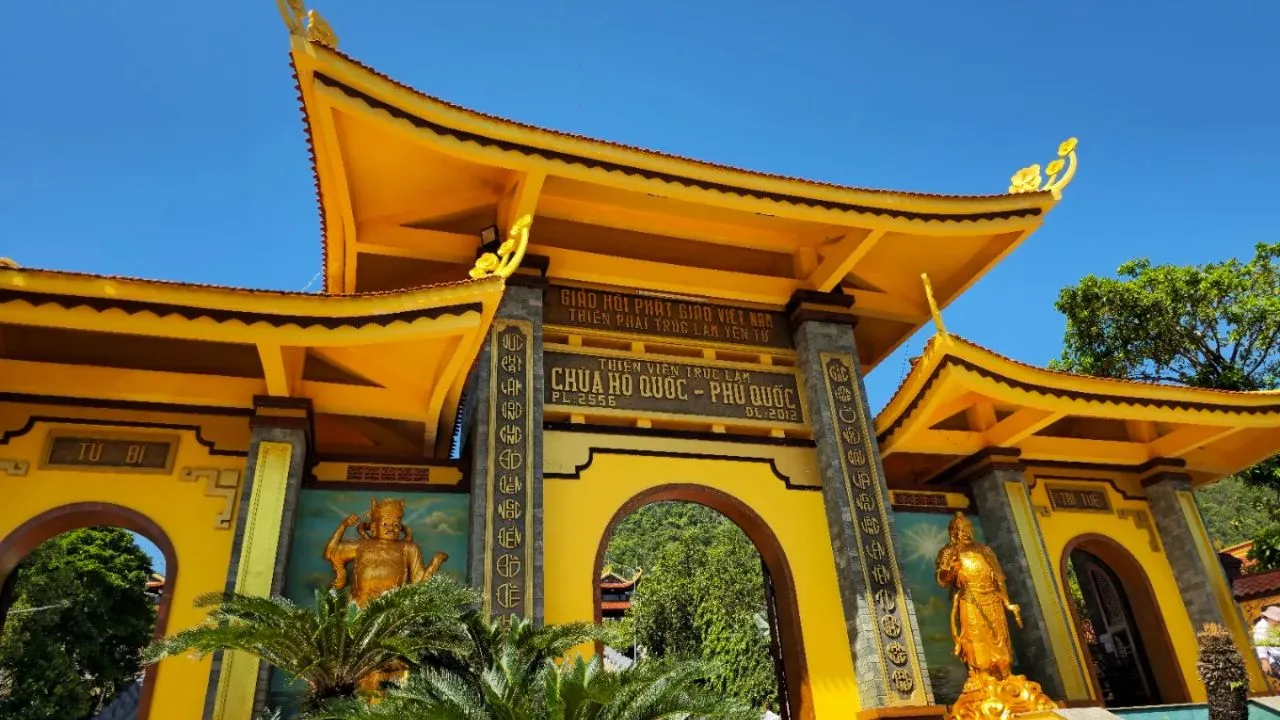
The highlight that makes Ho Quoc Pagoda special is its ancient architecture in harmony with nature. The pagoda was designed to imitate the architectural style of the Ly - Tran Dynasty in the 13th century, bearing the mark of the Truc Lam Yen Tu Zen sect. The entire Ho Quoc Pagoda was built mainly from rare ironwood, the giant wooden pillars hundreds of years old were carefully selected to create a solid and lasting structure. The pagoda roof is covered with curved red tiles in the traditional style of a pavilion, standing out against the blue sky. The elaborate carvings on the wooden doors, the reliefs, the dragon and phoenix statues... are all meticulously done, recreating the typical beauty of ancient Vietnamese Buddhist culture.

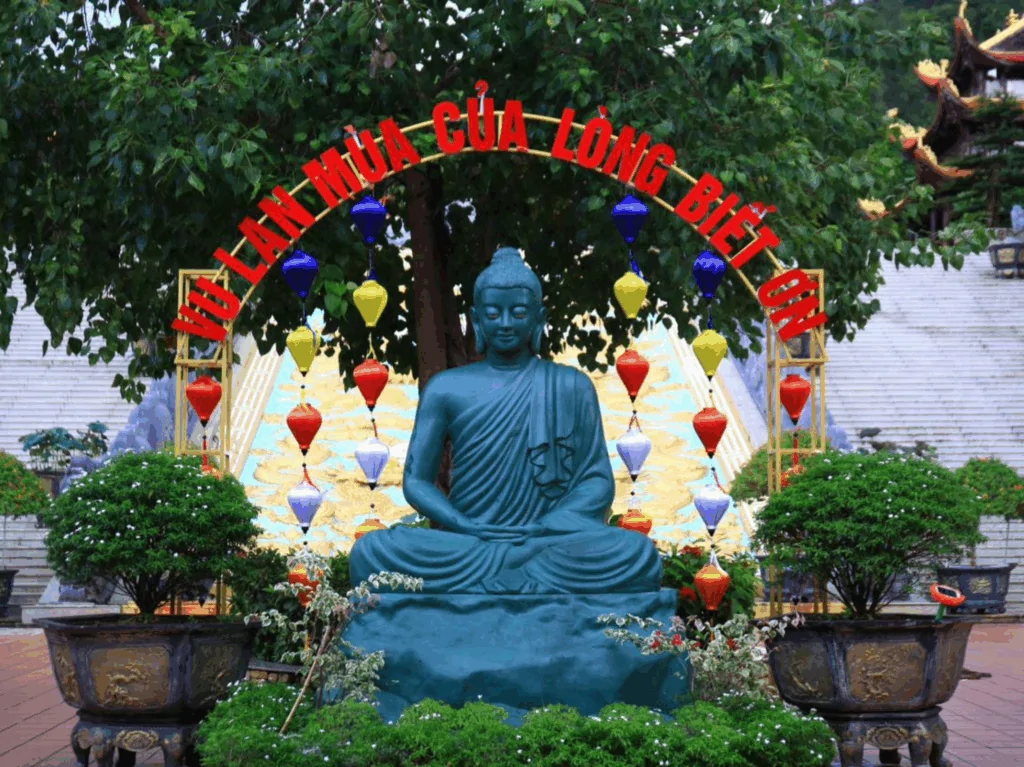
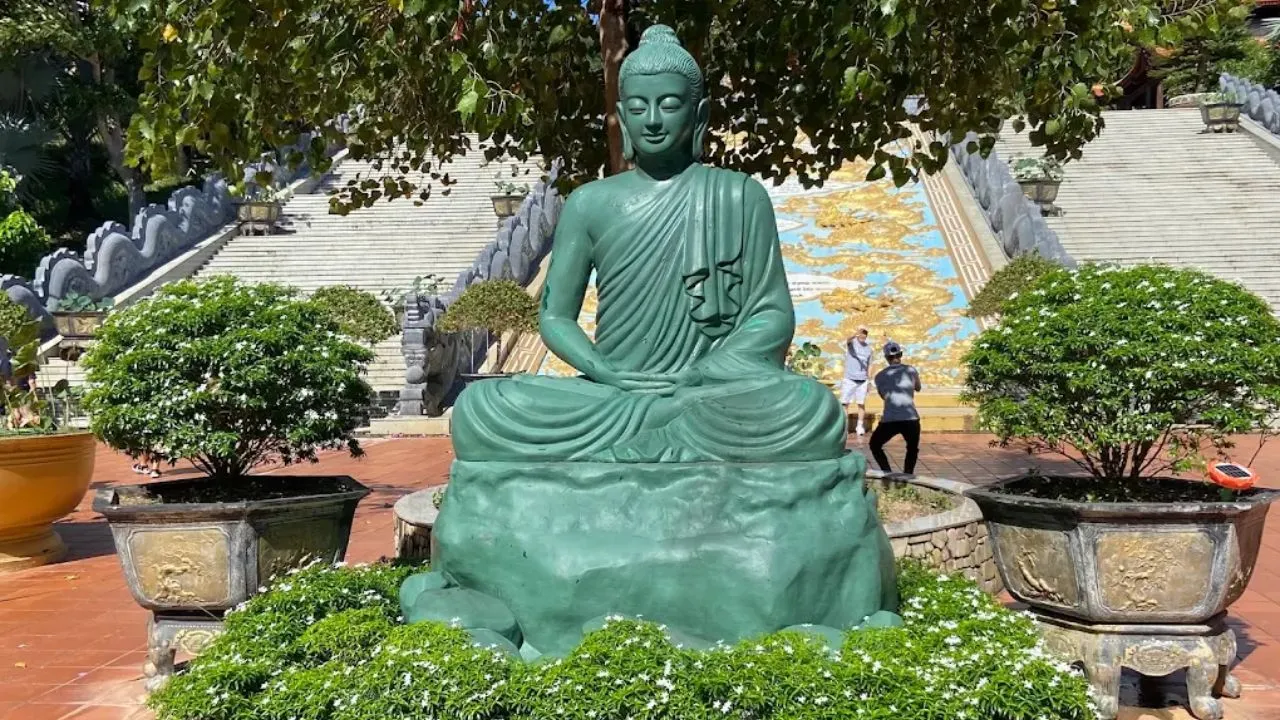
Passing through the majestic Tam Quan gate (consisting of three doors: the middle one is called Dia Giac gate, the left one is Bat Nha gate, the right one is Giai Thoat gate), visitors will officially set foot in the peaceful grounds of the pagoda. From the Tam Quan gate, a stone staircase of 70 steps leads straight to the main hall, on both sides of the staircase are a pair of massive, winding stone dragons, symbolizing the protection of the Dharma. Right in the middle of Thien Tinh yard (large sky yard) is a majestic marble statue of Buddha Shakyamuni, nearly 3 meters high, meditating under the shady Bodhi tree. The main hall area (Tam Bao Hall) is a solemn place of worship: inside is a statue of Buddha Tathagata, on both sides are statues of Bodhisattvas and Dharma Protectors. Behind the main hall is the Ancestor House worshiping the Three Holy Ancestors of the Truc Lam Zen sect (Tran Nhan Tong, Phap Loa, Huyen Quang). The pagoda grounds also have a bell tower and a towering wooden drum tower, when the bell rings, the clear echo can be heard throughout the mountains and forests.

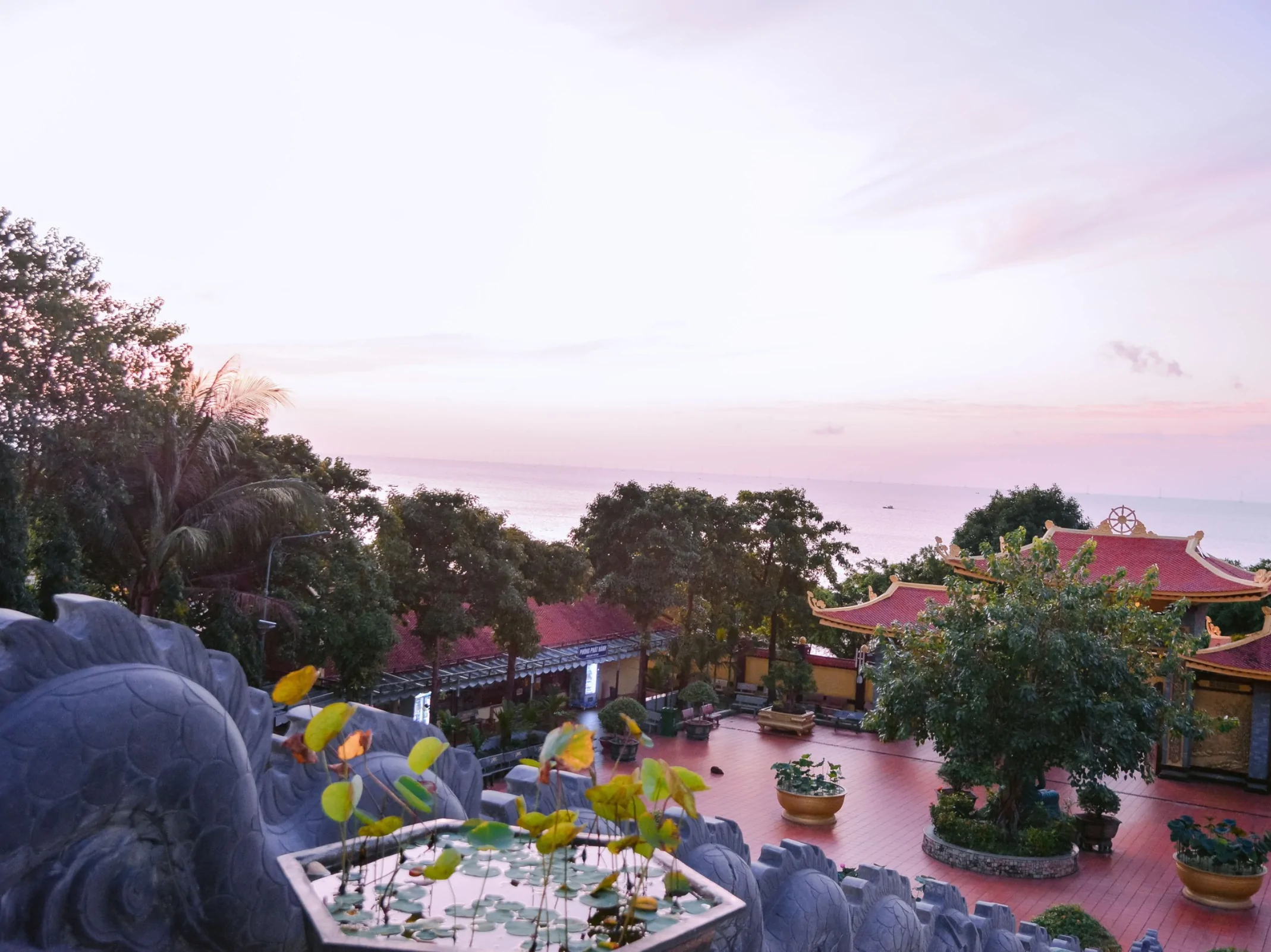
The unique feature of Ho Quoc Pagoda lies in its prime location: its back rests on the mountain and its face faces the vast ocean. Standing from the temple yard, visitors can enjoy a panoramic view of the beautiful Phú Quốc sea and sky. Far in front is the emerald green of Bai Dam (the sea at the foot of the temple), blending with the deep blue horizon to create a majestic natural picture. In the early mornings, the sunrise rises from the East Sea, shining the first brilliant rays of sunlight on the horizon. Visitors can hunt for the sunrise and take impressive "virtual life" photos with the background of the temple and the ocean. In the late afternoon, the gentle sunset covers the red tile roof and the temple statues with a warm orange-yellow color, further enhancing the ancient and sacred beauty of the temple.

Surrounding the pagoda are lush green trees and preserved primeval forests. The air here is always cool and fresh thanks to the regulation of the forest and sea breeze. The pagoda's architecture, though majestic, is still in harmony with the wild nature, giving visitors the feeling of being lost in a paradise on earth. In particular, the coastal location of Ho Quoc Pagoda makes it the most beautiful sea-facing pagoda in Phú Quốc, an unmissable stop for those who love both spiritual tourism and enjoying the beautiful scenery of the sea and islands.

Architectural beauty of Ho Quoc Pagoda Phú Quốc
The architectural beauty of Ho Quoc Pagoda Phú Quốc

Experience sightseeing and activities at Ho Quoc Pagoda

When visiting Ho Quoc Pagoda Phú Quốc, visitors will have many memorable experiences, both in terms of spiritual culture and in terms of enjoying the scenery:

  • Worship Buddha: As a sacred spiritual site, Ho Quoc Pagoda is an ideal place for visitors to burn incense and pray for peace for themselves and their families. Even if you are not a Buddhist, lighting an incense stick and meditating in front of the Buddha statue will bring a sense of peace and serenity to your heart.
  • Sightseeing, taking pictures: With its picturesque landscape, this is a great place to sightsee and take souvenir photos. Visitors often enjoy taking photos at the majestic Tam Quan gate, on the majestic dragon steps, or in the temple yard with the vast blue sea as a background. The moment of sunrise on the sea seen from the temple is a "valuable" scene that photographers do not want to miss. Get your camera or phone ready to capture the beautiful images here.
  • Enjoy the fresh airQuiet: Unlike other bustling tourist attractions, Ho Quoc Pagoda offers a quiet and peaceful space. Visitors can stroll under the shade of trees in the campus, listen to the temple bells, the rustling wind and feel the relaxation and escape. Many people compare this experience to "finding oneself" in the midst of the hustle and bustle of life.
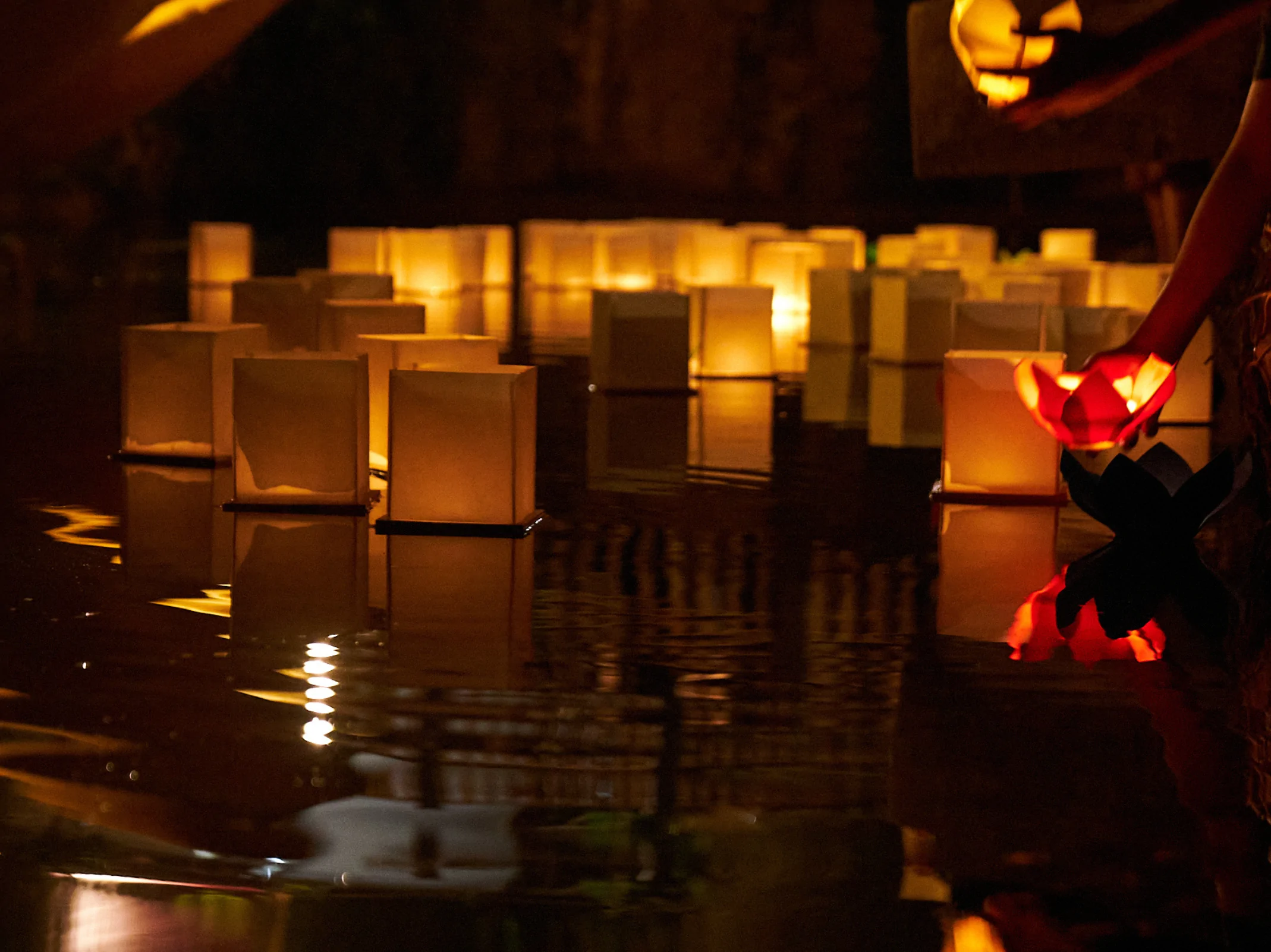
  • Participate in festival events: On important Buddhist holidays (such as Buddha's Birthday, Vu Lan Festival) or Lunar New Year, Ho Quoc Pagoda often organizes large ceremonies and rituals. If you have the opportunity to travel to Phú Quốc at these times, you will witness the solemn festival atmosphere at the pagoda, with many Buddhists and local people participating, along with traditional rituals such as releasing flower lanterns, chanting, praying for peace at the beginning of the year... This is a unique cultural experience that helps visitors understand more about the spiritual life of Vietnamese people.
  • Combine visiting places near the temple: Thanks to its location in the South of the island, visitors can easily combine a trip to Ho Quoc Pagoda with nearby attractions. Some attractive suggestions include:
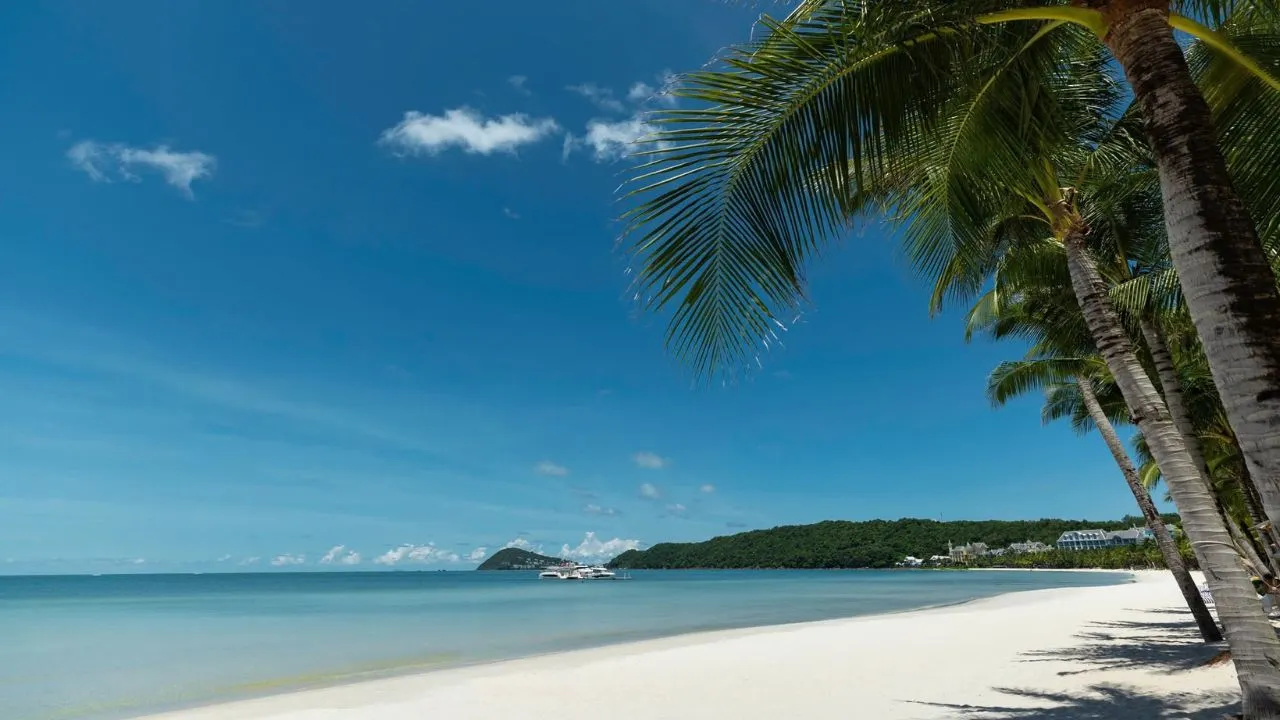
    Sao Beach Phú Quốc – famous fine white sand beach, only ~5-7km from the temple, suitable for swimming, playing water sports and enjoying fresh seafood at coastal restaurants after leaving the temple.
    Phu Quoc Prison (Coconut Tree Prison) – a special national historical site, about 4km from the pagoda, where the war crimes and the indomitable spirit of Vietnamese soldiers are truly recreated. This is a meaningful place to visit if you want to learn more about the heroic history of the island.
    Khem Beach – a pristine beach in the southernmost part of the island, about 8km from the temple, famous for its pristine beauty and special herring salad. Visitors can visit Khem Beach to swim and enjoy famous seafood dishes after visiting the temple.
Ho Quoc Pagoda Phú Quốc

Resorts near Ho Quoc Pagoda

The area of Duong To commune and Nam Dao Phú Quốc is increasingly developing, so staying near Ho Quoc Pagoda becomes convenient with many options from budget to luxury. If visitors want to rest at resorts and hotels near the pagoda for easy travel and sightseeing, you can refer to some of the following suggestions:

  • Hoang Bach Resort: Located in Group 7, Suoi Lon Hamlet (only about 2km from Ho Quoc Pagoda), Hoang Bach Resort is an ideal choice for tourists who want to stay near the pagoda. The resort has an airy space, simple rooms, and a reference price of about 600,000 VND/night. From here, you can drive just a few minutes to the pagoda gate, very convenient for going to the temple early in the morning or late at night.
  • Kinh Bac Hotel Phú Quốc: Located on Provincial Road 46, Suoi Lon Hamlet (on the main road leading to the pagoda), Kinh Bac Hotel is also a place to stay near Ho Quoc Pagoda with reasonable prices (from ~500,000 VND/night). The motel is clean, has basic amenities and is convenient for self-guided motorbike tours to visit the pagoda and surrounding areas.
  • Xuan Hien Resort: This resort is located at Sao Beach, An Thoi Ward (about 5km from the pagoda). Xuan Hien Resort has the advantage of being close to the beautiful Sao Beach, visitors can combine beach vacation and visit the pagoda. The resort has bungalows with garden and sea views, priced from about 700,000 VND/night. From Xuan Hien Resort, it only takes 10 minutes by car to reach Ho Quoc Pagoda via Provincial Road 46.
  • Ong Lang or Montana Resort (other): (More advanced options) If visitors want a more luxurious resort experience, they can choose high-end resorts not far from Ho Quoc Pagoda such as Premier Residences Phú Quốc or New World Phú Quốc Resort (Khem Beach area, ~15 minutes by car), Premier Village Phú Quốc Resort (Ong Doi Cape, ~20 minutes by car). These 5-star resorts, although not right next to the pagoda, are still located in the South of the island, providing world-class services and can incorporate a visit to the pagoda into the itinerary. For example, New World Phú Quốc About 8-10km from Ho Quoc Pagoda, convenient for tourists staying at Bai Khem who want to visit the pagoda in the morning and then return to the resort to relax in the afternoon.

In general, the hotels and resorts near Ho Quoc Pagoda are quite diverse, meeting the needs of many types of tourists. Staying in the area near the pagoda not only helps save travel time but also brings a peaceful experience, close to nature when you wake up in the fresh air of the island suburbs. Tourists should book in advance (especially during the peak tourist season) to ensure a satisfactory accommodation, and can combine asking to rent a motorbike/car at the accommodation for convenient sightseeing around the area.

Ho Quoc Pagoda Phú Quốc

Culinary culture around Ho Quoc Pagoda area

After visiting and worshiping at the pagoda, visitors will surely want to enjoy local delicacies to recharge their energy. The area directly surrounding Ho Quoc Pagoda does not have many large restaurants, as the pagoda is located in a quiet suburb. However, just move a few kilometers in the direction of An Thoi Or go to the nearby beaches, visitors will find attractive culinary locations with fresh Phú Quốc specialties.

  • Bai Sao Seafood: Bai Sao (~5-7km from the pagoda) is famous not only for its beautiful scenery but also for its many coastal restaurants serving fresh seafood. After a few minutes of meditation at the Buddha's door, you can visit the restaurants in Bai Sao to enjoy the typical dishes of the island Phú Quốc. Ham Ninh steamed crab, herring salad wrapped in rice paper, grilled scallop with salt and chili (grilled large scallop meat), grilled sea urchin with scallion oil are all famous specialties that visitors should try. Restaurants such as Long Beach and Paradiso in Bai Sao have airy spaces close to the sea, where you can enjoy delicious food while admiring the emerald green sea.
  • Cuisine of An Thoi fishing village: An Thoi town (about 10km south of the pagoda) is the center of the South Island, where you can find many local eateries. If you want to experience local cuisine, you can visit An Thoi market to taste Bun Ken Phú Quốc (Phú Quốc style fish noodle soup with fragrant and fatty coconut broth), Kien Xay stir-fried noodle soup (specialty mixed seafood fresh noodle soup), or street snacks such as fish cake bread, sweet soup, palm cake... In the evening, An Thoi also has a few popular drinking places serving unique snail dishes, grilled squid, sea urchin porridge, and crab blood pudding for diners who like to explore new dishes.
  • Specialties to buy: On the way from Ho Quoc Pagoda back to Duong Dong, visitors can stop by Ham Ninh fishing village (if you go to the East of the island, although it is a bit far ~20km) to enjoy the famous Ham Ninh crab and buy genuine Phú Quốc fish sauce, Phú Quốc pepper or sim wine as gifts. Although not located close to the temple, Ham Ninh is a unique culinary and cultural destination if you have a wider itinerary around the island.

In general, the culinary culture around Ho Quoc Pagoda focuses on fresh seafood and local specialties of Phú Quốc. The advice for visitors is to enjoy seafood at noon at Sao Beach or Khem Beach after visiting the pagoda (both on time and on the way). Don't forget to try the herring salad - the "top" specialty of Ngoc Island, or sip some wild sim wine Phú Quốc to feel the unique flavor that can only be found here. Discovering local cuisine will enrich your trip experience, helping you better understand the culture of Phú Quốc in addition to the spiritual aspect felt at the pagoda.

Ho Quoc Pagoda Phú Quốc

The ideal time to travel to Ho Quoc Pagoda Phú Quốc

Phú Quốc is a tropical island so the weather is divided into two distinct seasons: dry season (November to April of the following year) and rainy season (May to October). Visitors can visit Ho Quoc Pagoda at any time of the year, but each season will bring a slightly different experience:

  • Dry season (November – April): This is considered the most ideal time to travel to Phú Quốc in general and visit Ho Quoc Pagoda in particular. At this time, the island's weather is very beautiful, the sky is clear, no rain, the air is cool and pleasant. Especially December, January, February is the peak season with mild sunshine, temperature 25-28°C, very convenient for moving, climbing stairs and sightseeing. If you like taking pictures, the clear blue sky in the dry season will give you extremely brilliant sea temple background photos. However, because it is the tourist season, the number of visitors to the pagoda and attractions is quite large, you should go early to enjoy a more deserted space.
    Rainy season (May – October): During this season, Phú Quốc has sudden tropical showers. The Ho Quoc Pagoda area in the middle of the forest will be covered in fresh green, the trees will be more lush. The landscape around the pagoda in the rainy season has a peaceful beauty, there are fewer tourists so the space is very quiet. However, the rain can affect the movement (slippery roads, reduced visibility) and outdoor sightseeing plans. If you go in the rainy season, you should prepare an umbrella, raincoat in case of sudden rain. The rainy season is concentrated in July-August-September, it is best to avoid these months if you are not used to wet and rainy weather.

Besides the season, the time of day is also important when visiting Ho Quoc Pagoda. Experience shows that visitors should visit the pagoda early in the morning (6am – 9am) or late in the afternoon (around 4pm – 5:30pm). These are the times weather Cool, pleasant and beautiful light for sightseeing. Early morning also has the opportunity to watch the beautiful sunrise over the sea from the temple, while late afternoon can witness the sunset gradually falling over the mountain range behind the temple. Avoid going in the middle of the hot noon because the temple grounds are large, with little shade on the main yard, you will easily get tired under the tropical sun.

If you want to combine spiritual cultural experiences, the full moon days (15th lunar month) or the first day of the lunar month are also good occasions to visit the temple. On these days, local people often come to the temple to worship Buddha, the atmosphere is more bustling than usual and you can join in praying for peace with everyone. However, be prepared that the temple will be more crowded with worshipers, sometimes you have to park your car far away and walk a lot. In general, consider the purpose of your trip and personal conditions to choose the most suitable time - no matter what season you visit Ho Quoc Pagoda, this place always welcomes you with its inherent sacred beauty and peace.

Ho Quoc Pagoda Phú Quốc

Useful tips for traveling to Ho Quoc Pagoda Phú Quốc

To make your visit to Ho Quoc Pagoda complete and memorable, visitors should keep in mind the following tips and experiences:

  • Dress appropriately: As this is a sacred place, visitors should wear modest and polite clothing when entering the temple. Choose long pants or skirts that cover the knee, and shirts with sleeves (avoid shirts that are too short or off-shoulder) to show respect. At the same time, wear comfortable, easy-to-remove flat shoes because when entering the main hall, you may need to leave your shoes outside.
  • Keep quiet and orderly: Ho Quoc Pagoda welcomes a large number of visitors every day, but that does not detract from its inherent serenity. When visiting, speak softly, limit joking, and especially keep quiet when entering the shrine area so as not to disturb others who are praying. If you are in a large group, you should disperse to avoid noisy gatherings.
  • Time of day to visit: As mentioned, try to visit the temple early in the morning or late in the afternoon. This time is not only less hot but also more beautiful. Early morning around 6-7am is ideal: less crowded, fresh air and a chance to watch the sunrise. If you have to go at noon, don't forget to bring a hat/wide-brimmed hat, umbrella, sunscreen to protect your health under the harsh sunlight.
  • Prepare personal items: The temple grounds are large and have many steps, so bring drinking water to stay hydrated, and a small towel to wipe off sweat if needed. You can bring binoculars if you want to see the sea more clearly from above – standing in the temple grounds, using binoculars you can see as far as Hon Thom or the boats offshore. Of course, a fully charged camera or phone is an “inseparable item” for you to capture beautiful moments.
  • Amenities: The temple has a spacious parking lot right in front of the Tam Quan gate, enough space for both cars and motorbikes, so you can rest assured if you drive there yourself. There is no parking fee, but you should lock your car carefully and not leave valuables. There may be a small souvenir or simple beverage stall in the temple grounds, but not many. It is best to eat or buy water before entering the temple if you are in a large group, because there are no large stores near the temple.
  • Do not litter, protect the landscape: When visiting any tourist destination, it is important to be aware of maintaining public hygiene. Make sure you dispose of your trash in the right place, do not litter in the temple grounds to keep the landscape clean and beautiful. Ho Quoc Pagoda is located in the middle of the natural forest and sea, each visitor has the responsibility to contribute to protecting the environment here.
  • Combine reasonable means of transport: The road to Ho Quoc Pagoda is now conveniently paved. Visitors can go by rented motorbike (if you like to experience backpacking, the rental price is ~150-200k/day) or car/tourist car if traveling in a family group. In addition, if departing from the mainland, you need to go to island Phú Quốc by plane or speedboat. Currently, the speedboat Phú Quốc Express is the choice trusted by many tourists thanks to its safety and convenience. (You can book a train ticket from Rạch Giá/Hà Tiên to Phú Quốc to bring your personal vehicle, very convenient for traveling around the island.)
Ho Quoc Pagoda travel tips Phú Quốc
Ho Quoc Pagoda Phú Quốc

Finally, don’t forget to enjoy the trip your way. The journey to Ho Quoc Pagoda Phú Quốc is not just a visit to a pagoda, but also an opportunity for you to find a peaceful place in your soul, immerse yourself in nature and learn more about the beauty of local culture. Be well prepared but also keep a relaxed mind, you will have a memorable experience in this sacred land.

Please visit the website phuquocexpress.com or call hotline 0901868878 to book high-speed train tickets to Phú Quốc, departing flexibly every week according to the schedule. Why wait any longer to reward yourself with a smooth sea journey, both admiring the vast sea and sky and getting closer to the historical landmarks and amazing scenery of Ngoc Island Phú Quốc? If you are planning to explore Phú Quốc - from the sacred Ho Quoc Pagoda to the poetic beaches - do not hesitate to choose the high-speed train Phú Quốc Express to experience all the wonderful things mentioned above for yourself. Book your tickets today and get ready for a memorable trip to Phú Quốc - the sacred, beautiful land of the Fatherland!

Photo Source: Chu Ho Quoc Phú Quốc

Topic :
Index