
 EN
EN  VI
VI  CN
CN  KM
KM  KO
KO  JA
JA 
Amid the vast expanse of sea and sky at Côn Đảo, next to the Hàng Dương Cemetery—a memorial to the heroic martyrs who fell in the fight for national independence. There is also a special spiritual site that preserves the story of a woman’s loyalty, self-sacrifice, and patriotism. That place is Temple Ms. Phi Yến at Côn Đảo, also known as An Son Temple Côn Đảo.
Attached to the tragic life of Concubine Hoàng Phi Yến (Lê Thị Răm), the temple is not only a Con Dao historical site rich in cultural value, it is also a place where people and tourists place their spiritual faith. For those who want to understand more deeply about the history, culture, and unique legends of this sacred land, Temple Ms. Phi Yến at Côn Đảo is a must-visit stop.
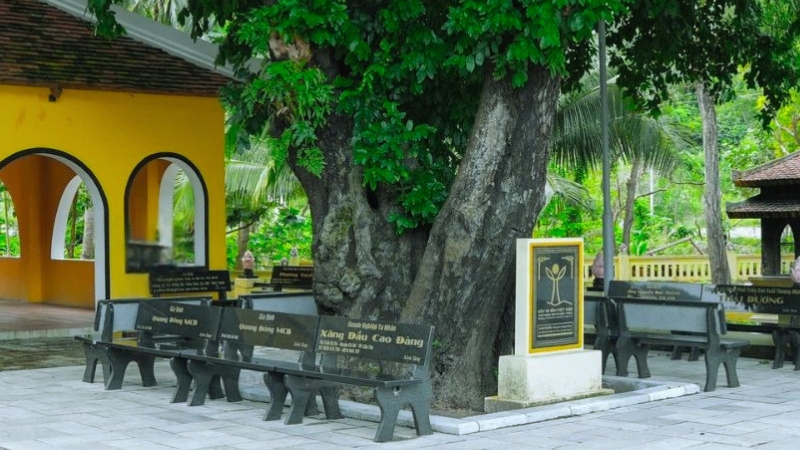
Overview of Temple Ms. Phi Yến at Côn Đảo (An Son Temple)
Temple Ms. Phi Yến at Côn Đảo Where? How to get there
When it comes to the most famous spiritual destinations on the pearl island, Temple Ms. Phi Yến at Côn Đảo is always a landmark that many tourists visit to hear the tragic historical story of a virtuous woman. The temple's official name is An Son Temple Côn Đảo, located on Hoàng Phi Yến Street in Residential Area No. 3, about 2 km southwest of the town center of Côn Đảo.
The shrine is conveniently located near many famous attractions, such as the Côn Đảo Museum, An Hai Beach, and Nui Mot Pagoda. As a result, visitors can easily combine a cultural, historical, and spiritual exploration into a single day.
To go to An Son Temple, tourists can choose to travel by motorbike, electric car, or taxi. The roads are spacious, flat, and very easy to navigate thanks to the clear signage system. This convenience has made Temple Ms. Phi Yến at Côn Đảo become an essential stop on any itinerary to explore the town of Côn Đảo.
Opening Hours and Admission Fees
Temple Ms. Phi Yến at Côn Đảo Open daily from approximately 7:00 AM to 6:00 PM. This is a community place of worship, so visitors are welcome to enter, tour, and offer incense completely free of charge.
More than just a sacred place of worship, the shrine also embodies the warm and hospitable cultural spirit of the people of Côn Đảo. Anyone who steps through the temple gates can feel the solemn, serene atmosphere and the reverence that the local people have held for Lady Phi Yen for hundreds of years.
The turbulent history and unique architecture of Temple Ms. Phi Yến at Côn Đảo
History of formation and important milestones
History of Temple Ms. Phi Yến at Côn Đảo tied to the tragic life of Empress Consort Hoàng Phi Yến, who is popularly known by the real name Le Thi Ram.
According to local legend, after Bà's death in 1785, the people built a shrine to commemorate her merits and integrity.
By 1861, when the French colonists occupied Côn Đảo, the residents were displaced from their homes, causing the shrine to gradually fall into disrepair and eventually collapse over time.
It wasn't until 1958, during the period of the US-ARVN administration of the island, that the local people joined hands to rebuild the temple more elaborately on the old foundation. Since then, this place has become one of the Con Dao historical site carries special cultural value.
In 2007, An Son Temple was recognized as a Provincial Historical and Cultural Relic. Notably, in April 2022, Bà Phi Yến's Death Anniversary It has been officially recognized as a National Intangible Cultural Heritage, affirming the historical value and long-standing religious beliefs of the Côn Đảo community.
Discover the “Number One” architecture and tranquil grounds Temple Ms. Phi Yến at Côn Đảo
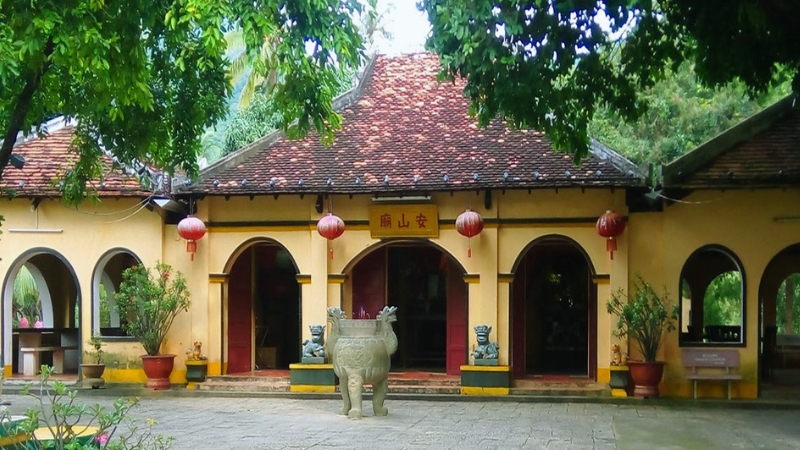
Campus Temple Ms. Phi Yến at Côn Đảo approximately 4,200 m², with a traditional “chữ Nhất” (character one) architectural style characteristic of Southern religious structures.
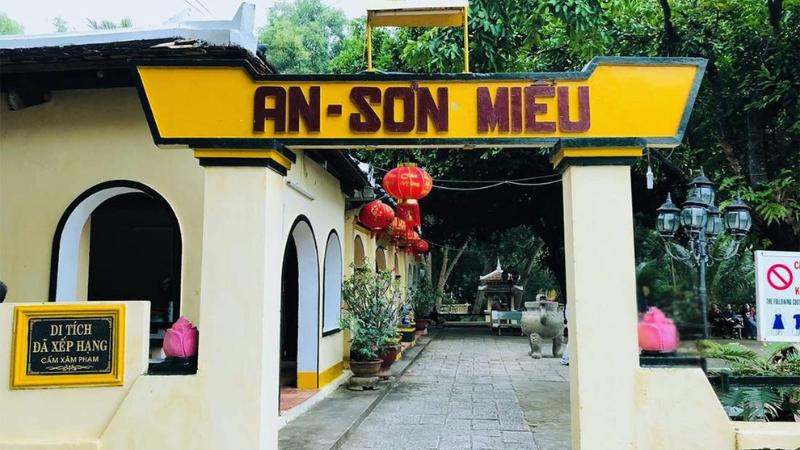
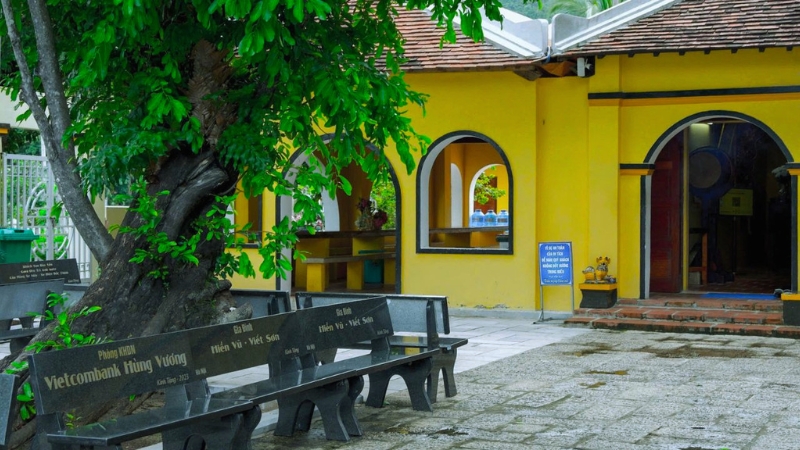
From the main gate, visitors will encounter a prominent horizontal lacquered board with Han characters that reads “An Son Temple“Stepping through the gate is a wide courtyard shaded by green trees, with a round pond and a rockery simulating a cave on Hon Ba – where, according to legend, Lady Phi Yen was once imprisoned.
The most striking feature for many people is the ancient persimmon trees that are hundreds of years old. Each blooming season, the faint scent of persimmon flowers spreads throughout the campus, creating a rare sense of relaxation and peace.
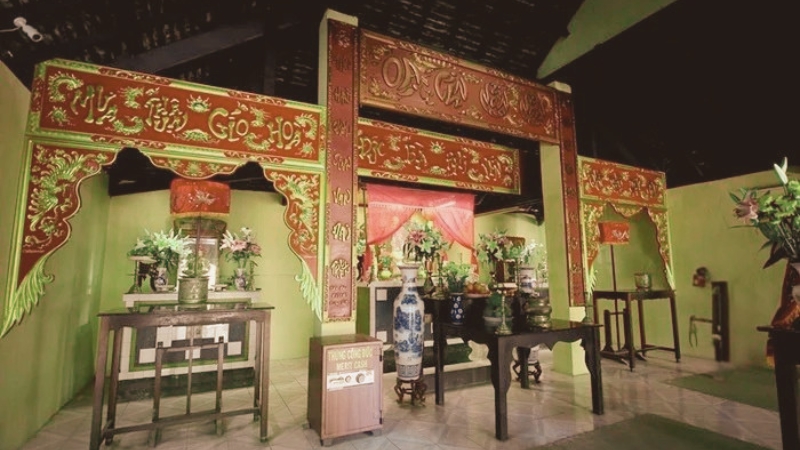
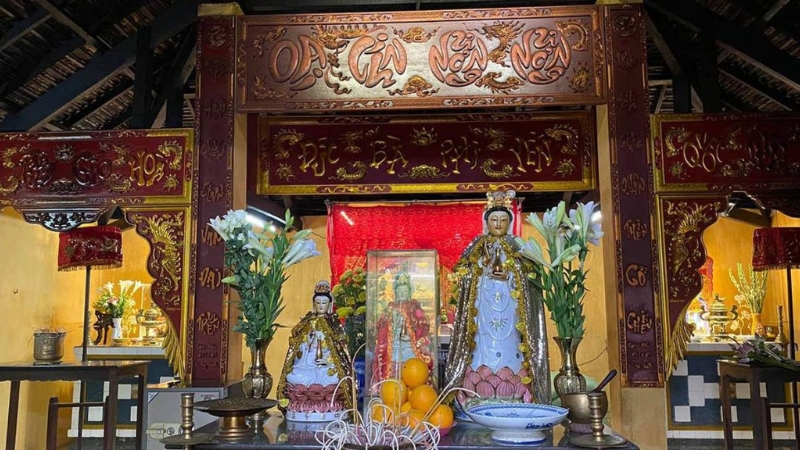
Inside the main hall, the statue of Bà Phi Yến is placed in a solemn position. There is also an altar dedicated to Admiral Ngọc Lân, along with many gods and Buddhas according to folk beliefs. The quiet, cool space makes anyone who visits feel a sense of peace in their soul.
Tragic anecdotes about Concubine Hoang Phi Yen (Le Thi Ram)
Patriotic advice and the sentence of exile to Con Dao.
In 1783, during a period of historical upheaval, Lord Nguyễn Ánh fled to Côn Đảo to escape pursuit by the Tây Sơn forces.
When Nguyễn Ánh intended to request French military aid to regain power, Empress Consort Hoàng Phi Yến, real name Le Thi Ram, discouraged
“Domestic matters should not rely on outsiders, as it may lead to many complications later on.”
The advice demonstrates her foresight and patriotic spirit. However, Nguyễn Ánh suspected her of colluding with the Tây Sơn army. He initially intended to have her executed but later commuted the sentence to banishment to a cave on Hòn Bà island in the middle of the sea.
Nowadays, when we talk about Legend of Lady Phi Yen, the people of Côn Đảo still see this as a testament to the patriotism and self-sacrifice of a woman who was ahead of her time.
The grief of losing a child and a timeless folk song
The tragedy didn't end there.
As the Tay Son army continued their pursuit, Nguyen Anh hurriedly boarded a boat and fled. At that time, his 5-year-old son Hoi An Prince, commonly known by the folk as Prince Pumpkin, crying for mom.
In his anger, Nguyễn Ánh threw his son into the sea.
The boy's body washed ashore in the area of modern-day Koro. Locals discovered it and took it for burial. Legend has it, a con Black Tiger appeared to protect the tomb, so the villagers respected him even more and established the Cậu Temple to worship him.
The tragedy of the mother and son is passed down through generations by the famous folk verse:
“The wind carries the mustard greens to the sky,
The leftover vegetables are left to endure a bitter life.”
In which, the Cải plant symbolizes Prince Pumpkin, While coriander is the image of a grandmother Le Thi Ram, The mother had to live with the pain of losing her child and injustice throughout her life.
Rescue and a Chaste Ending
According to legend, after being imprisoned on Hon Ba, White Ape together Black Tiger helped get the lady out of the cave.
Returning to the mainland, she visited the grave of her child in Co Ong village and then moved to live in An Hai village.
By the 15th day of the 10th lunar month in 1785, during a vegetarian village ceremony, the name Biện Thi accused of damaging her reputation. To preserve her honor and integrity, she severed her own arm and committed suicide at the young age of 24.
The people were moved by that loyalty and built a temple to commemorate them.
To this day, many people still recite the verses:
“Burning incense to swear loyalty to Lord God,
Keep your chastity whole, your heart complete...”
As a tribute to the woman who chose death to protect her honor and her character.
The Commemoration of Bà Phi Yến – A Unique Spiritual and Cultural Trait
Every year, on the 17th and 18th of the 10th lunar month, the people of Côn Đảo once again solemnly celebrate Memorial Service for Mrs. Phi Yến Côn Đảo in An Son Temple.
This is considered the largest folk festival on the island, attracting a large number of locals and tourists from far and wide to attend.
A special feature of the festival is that all offerings are vegetarian, as the Lady passed away during a vegetarian ritual. During the festival, there will be many activities such as a procession of royal seals, incense offering, folk art performances, reading of eulogies, and tasting vegetarian dishes prepared by the local people themselves.
Beyond its religious significance, the festival is also an occasion for the community to commemorate virtuous women, while honoring the patriotic spirit, self-sacrifice, and unwavering loyalty of Bà Phi Yến.
My Experience Visiting the Bà Phi Yến Shrine at Côn Đảo and Going to Côn Đảo to Pray for a Romantic Partner
Guide to purchasing offerings and preparing a worship tray Bà Phi Yến Shrine at Côn Đảo
One of the most important things when visiting Bà Phi Yến Shrine at Côn Đảo The offerings must be entirely vegetarian.
Visitors should prepare fresh flowers such as daisies, lotuses, or lilies; a five-fruit offering; sticky rice and sweet soup; along with incense and candles. Absolutely do not bring meat or fish, or any savory offerings into the temple area.
According to folk belief, Madame Phi Yen is a symbol of virtue, fidelity, and unwavering love. Therefore, many people choose Go on a Côn Đảo matchmaking trip at An Son Temple, hoping to find a good romantic partner or maintain a lasting happy family.
The most important thing in prayer is not expensive offerings, but sincerity and good intentions of each person.
Notes on demeanor and attire when visiting Temple Ms. Phi Yến at Côn Đảo
To show respect at sacred sites, visitors should choose modest, polite attire such as shirts with sleeves and long pants.
When entering the temple grounds, maintain a solemn attitude, walk and speak softly, and refrain from loud laughter or taking photos in restricted areas.
Especially, the ancient persimmon trees within the campus Temple Ms. Phi Yến at Côn Đảo As the flower is revered by locals as a sacred symbol, tourists should not pick the flowers, break branches, or engage in any behavior that affects the landscape.
In addition, incense sticks and a lighter should be prepared in advance for the convenience of offering incense.
Spiritual tourism combined with
After the visit An Son Temple Côn Đảo, tourists can continue their journey to explore other famous spiritual sites on the island.
A popular itinerary is: Bà Phi Yến Temple → Núi Một Pagoda → Năm Cô Temple.
However, to make the story of Bà Phi Yến and her unfortunate son complete, visitors should definitely visit Miếu Cậu, located near Bãi Đầm Trầu. This is the place where Prince Hoi An (Prince Cai), a figure closely associated with a touching legend that has been passed down for more than two centuries in the Côn Đảo region.
That journey not only helps visitors understand more about local history and beliefs but also allows them to deeply feel the humanitarian values, loyalty, and sacrifice that have made the enduring vitality of Con Dao historical site to this day.
Having existed for over two centuries, Temple Ms. Phi Yến at Côn Đảo not only a place that preserves a touching historical anecdote but also a symbol of loyalty, sacrifice, and the noble virtues of Vietnamese women. The pilgrimage to Ba Temple is not simply for praying for health, peace, or marital happiness, but also an opportunity for those who Go on a Côn Đảo matchmaking trip express heartfelt reverence for a venerable personality.
If you have ever visited An Son Temple Côn Đảo, Please share your feelings. And don't forget to book tickets Phu Quoc Express high-speed ferry To make your spiritual journey—a journey to fully discover the sacred values of the Côn Đảo region—even more comfortable, safe, and economical!
