
 EN
EN  VI
VI  CN
CN  KM
KM  KO
KO  JA
JA 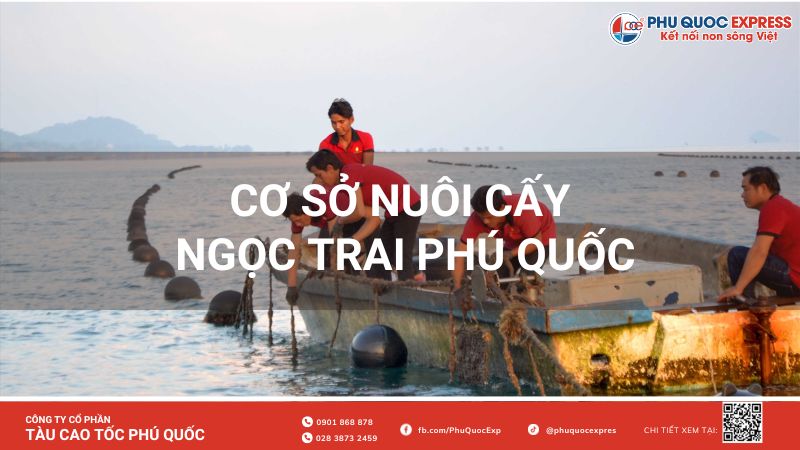
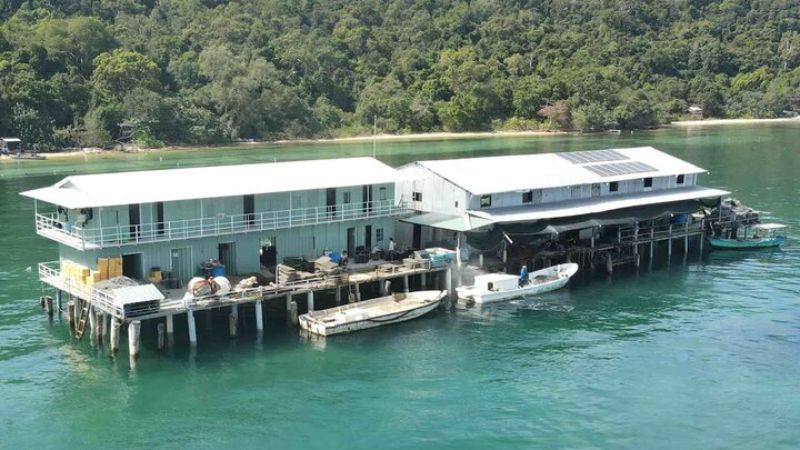
Pearl Farm Phú Quốc It has long been one of the most famous tourist attractions on Pearl Island. Not only does it attract visitors with the elegant beauty of its pearls, but it also offers a fascinating journey of discovery into the processes of pearl cultivation, harvesting, and crafting—a traditional craft unique to Phú Quốc.
1. Why are Phú Quốc pearls so highly regarded?
Phú Quốc boasts ideal natural conditions, including crystal-clear seawater, stable salinity, and a clean environment—making it highly suitable for pearl oyster cultivation. As a result, Phú Quốc pearls exhibit greater luster, smoothness, and a more vibrant iridescent sheen than those from many other coastal regions. At the Pearl Farm Phú Quốc, pearls are generally divided into 4 main types:
| Pearl type | Outstanding features | Young age at harvest | Size |
|---|---|---|---|
| Akoya | Ivory, sparkling light | 1-2 years | 2–8mm |
| Tahiti (black pearls) | Mysterious black, purple/grey/blue hue | 2–3 years | 8-15mm |
| South Sea | White, yellow, or silver — rare, high-end | 3–8 years | Large, premium |
| Mabe | Pinkish-white cream, medium shine | 1-2 years | 5–7 mm |
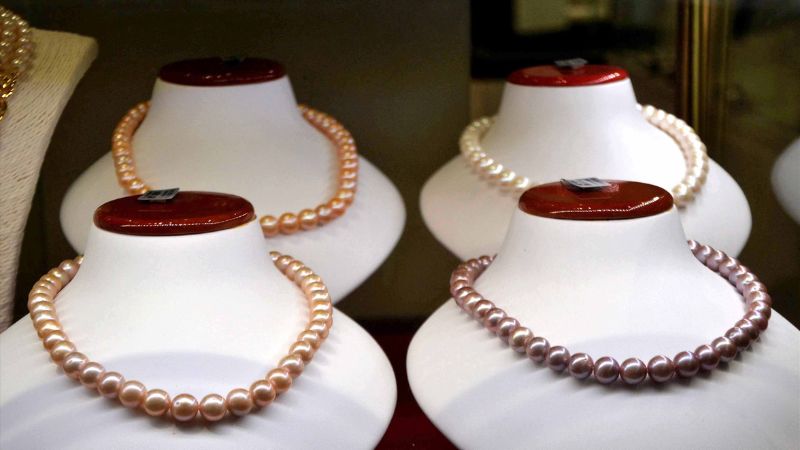
From the 20th century, the natural pearl bracelet was a common method for finding this type of precious jewelry. Divers would go down into rivers and seas to catch oysters and clams, then check which ones contained pearls. However, not all natural oysters and clams produce pearls: it was necessary to collect about 3 tons Shrimp, clams, new ones available 4–5 with possessing a complete gem; the rest, if they have gems, are usually not in beautiful shapes. That very scarcity gave birth to the profession pearl cultivation, help you be more proactive about the quantity and quality of jades.
2. How does the pearl cultivation process work?
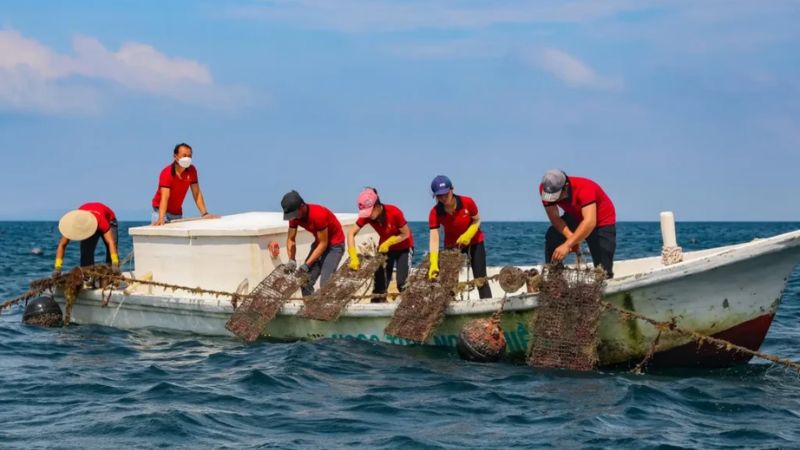
- Select male.[BR]Specimen selection. Select healthy male oysters of appropriate size and age, pre-nursed in cages, floating at sea.
- Implant marrow The technician inserts a nucleus (usually ground from a shell) along with a small piece of tissue from a donor oyster into the host oyster's body. This procedure requires high precision so that the oyster does not reject the implanted nucleus.
- Sea-fostering The juvenile fish are brought back to the nursery cages in calm, clean waters for regular health monitoring.
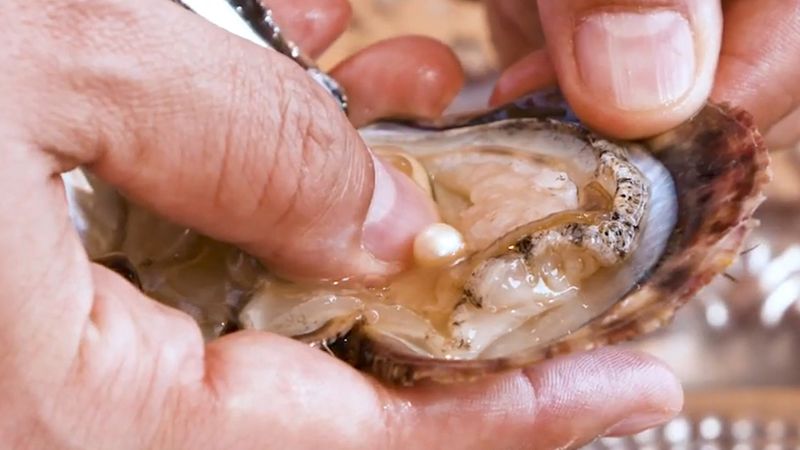
- Harvest When the time comes, the oysters are carefully opened to retrieve the pearls. The cultivation time varies depending on the type of pearl and the size of the nucleus, typically ranging from 1 to 8 years. This range can vary considerably between facilities, so it's recommended to ask the staff directly at the place you are visiting for the exact figures for each type.
- Classification and Manufacturing: Jewels are classified by shape, color, luster, and size, then crafted into jewelry.
3. Top 3 Reputable Phú Quốc Pearl Farming Facilities
| Base | Reference area | Operating hours (reference) | Highlights |
|---|---|---|---|
| Quoc An Pearls | Suoi May Intersection, Duong To Area, Special Zone Phú Quốc | Open all day | Over 30 years of cultivation, a ~1,000m² exhibition area, allowing custom jewelry design from raw jade. |
| Long Beach Pearls | 124 Tran Hung Dao, Duong Dong area, Special Zone Phú Quốc (with an additional showroom at the airport) | Open all day | Over 3,000 design samples, the largest exhibition scale on the island |
| Ngoc Hien Pearl | Tran Hung Dao Street, Duong To area, Special Zone Phú Quốc (near the airport roundabout) | Approximately 7:30 AM - 7:00 PM | Established in 1994, using Japanese technology, cultivating 5 types of pearls: Tahitian, South Sea, Akoya, Mabe, Maxima |
Quoc An Pearl - Large Scale, Scientific Tour Model
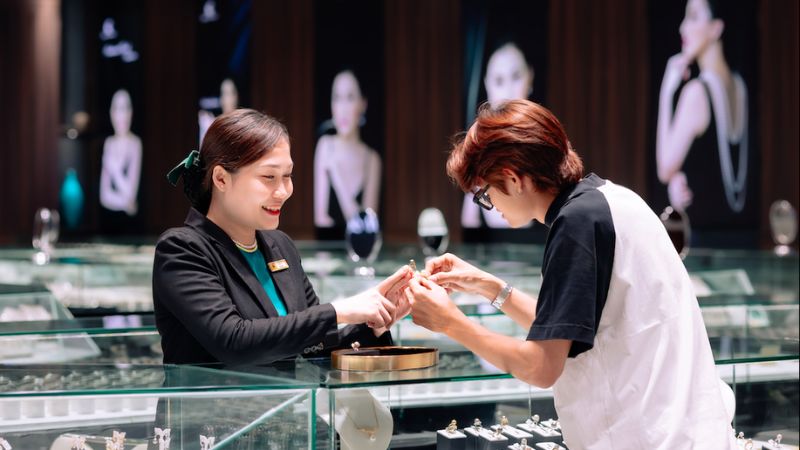
Quốc An pearls come in a wide variety of colors with a brilliant luster and perfect roundness—especially black and ocean-blue pearls, which are found almost exclusively at Phú Quốc. With over 30 years of pearl cultivation experience at Phú Quốc, the brand operates a 1,000-square-meter showroom where visitors can design their own jewelry from raw pearls or choose finished pieces (necklaces, rings, earrings…) with prices ranging from 500,000 to 5,000,000 VND.
Long Beach Pearl – Leading in Jewelry Design
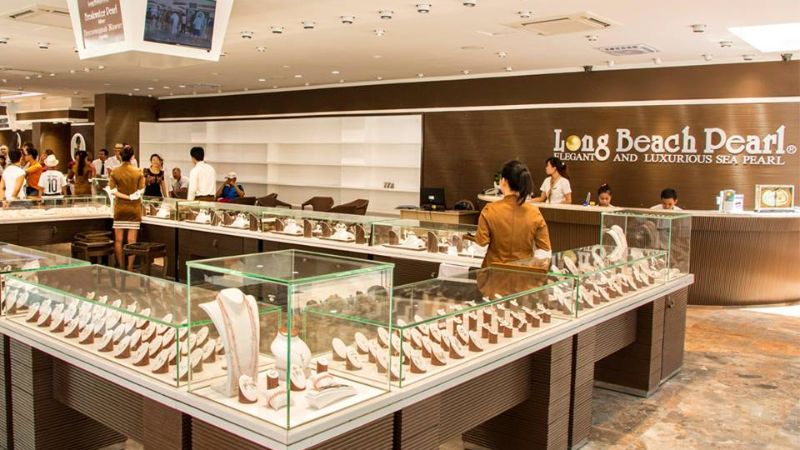
It is one of the largest and most modern pearl farming facilities in Phú Quốc. Visitors can learn about the pearl cultivation process from start to finish, including the harvest stage, while also admiring a collection of over 3,000 pearl jewelry pieces in a variety of styles, perfect for shopping or as souvenirs.
Ngoc Hien pearls - long-standing, deeply imprinted with traditional seafaring craft
Established in 1994, this is one of the pioneering and largest enterprises in Phú Quốc. The facility utilizes advanced pearl cultivation technology from Japan to cultivate various types of pearls, such as Tahitian, South Sea, Akoya, and Maxima, and allows visitors to observe the production process firsthand.
4. Reference Price for Phú Quốc Pearls
Prices vary depending on type, size, color, finish, and craftsmanship. The table below is for reference only; actual prices may differ at each establishment and at different times.
| Pearl type | Dimensions (mm) | Color | Reference price (VND/piece) |
|---|---|---|---|
| White | 8–10 | White, cream white | 2.000.000 – 6.000.000 |
| Gold | 9–11 | Light yellow, dark yellow | 3.000.000 – 9.000.000 |
| Pitch black | 10–12 | Black, dark gray | 4.000.000 – 15.000.000 |
| Akoya | 7–10 | White, pink, cream | 3.000.000 – 6.000.000 |
| Tahiti | 10–14 | Black, blue, purple | 6.000.000 – 15.000.000 |
| South Sea | 11–15 | White, yellow, silver | 8.000.000 – 22.000.000 |
Finished pearl jewelry (necklaces, rings, earrings, etc.) is usually more expensive than raw pearls, with prices varying widely depending on the craftsmanship. You should contact the establishment directly for the most accurate quote.
5. How to distinguish real from fake pearls
When buying pearls at Phú Quốc, it’s hard to avoid counterfeit items mixed in with the genuine ones, including many types of Chinese pearls on sale. Here are a few ways to spot them:
- Shape: Real pearls are rarely perfectly round—they can be teardrop-shaped, oval, or slightly irregular; pearls in the same strand are seldom identical. Fake pearls are often perfectly round and uniform in size.
- Shine Real jade has a natural, uneven matte luster, usually with only 1-2 iridescent colors. Fake jade has an even luster but more iridescent colors, looking less natural.
- Color: Real pearls have natural colors (white, pink, yellow, black, etc.), deep hues, and are not overly bright. Black pearls are considered the most precious and have the highest economic value. Fake pearls are usually gaudy with unnaturally uniform colors.
- Self-healing capability Real jade has a thick shell, capable of self-healing minor scratches over time—a characteristic that imitation jade lacks.
6. Engaging experiences when visiting the cultivation facility
Upon arriving at the Phú Quốc pearl farming facilities, visitors embark on a fascinating journey of discovery into the traditional art of pearl cultivation. Here, technicians provide a detailed introduction to each step involved in creating a perfect pearl—from selecting healthy oysters, implanting the nucleus, and nurturing them in an ideal marine environment, all the way to harvesting and shucking the oysters to extract the pearls.
A special experience that delights visitors is watching technicians skillfully open the oyster shells and extract the freshly harvested pearls—the moment of seeing the shimmering pearls, still glistening with a hint of seawater, is described by many visitors as “the most memorable part of the Phú Quốc trip.”.
After touring the process, visitors enter the exhibition area with meticulously designed high-end pearl collections, and are guided on how to distinguish real from fake pearls, and how to identify luster, roundness, and natural color.
Additionally, some facilities offer an experience on floating rafts at sea, allowing you to witness the cage farming system firsthand and learn about the factors that determine pearl quality, such as water source, depth, currents, and cultivation techniques. This activity is both educational and connected to the sea, making it suitable for families with young children.
7. When should I visit?
Based on the experience of many travel agencies on the island, the ideal time to visit pearl farms is during the dry season (approximately November to April of the following year)—the weather is beautiful, with little rain, making it convenient for travel and outdoor photography. During the day, it's best to visit in the cooler morning or afternoon to avoid intense sun.
8. Move to Phú Quốc and Phú Quốc Express
To visit Pearl Farm Phú Quốc, visitors can choose between airplane or high-speed train. Among them, Phú Quốc Express train It is the mode of transportation trusted by many tourists thanks to its speed, smooth ride, lack of seasickness, and reasonable fares. The ferry operates on routes Rạch Giá – Phú Quốc and Hà Tiên – Phú Quốc, allowing you to reach the island in just 1.5 to 2.5 hours. After docking, visitors can take a taxi or rent a motorbike to reach the pearl farms, which are located along the island’s main roads, making them very convenient to visit.
9. Frequently Asked Questions
How much does the Phú Quốc pearl cost?
Depending on the type, size, and clarity, prices range from approximately 2 to 22 million Vietnamese dong per stone, depending on the type (see the reference price list in section 4). Finished jewelry pieces are generally more expensive.
When should you visit a pearl farm?
The dry season (November – April) is the most ideal time, with beautiful weather and convenient travel.
How can you tell the difference between real and fake Phú Quốc pearls?
Based on the shape (real pearls are rarely perfectly round), luster (natural, uneven matte finish), color (natural, not overly vibrant), and the ability to self-heal minor scratches.
Which pearl farming facility in Phú Quốc is the most reputable and longest-established?
Three bases chosen by many tourists and locals are Quoc An (over 30 years), Ngoc Hien (established in 1994), and Long Beach (large exhibition scale with over 3,000 designs).
The Phú Quốc Pearl Farm is not only a famous tourist attraction but also a place that preserves a long-standing traditional craft of Pearl Island. If you’re planning to explore Phú Quốc, don’t forget to visit the pearl farms to fully appreciate the beauty, value, and essence of the island—one of the most memorable experiences on your journey to Pearl Island.
